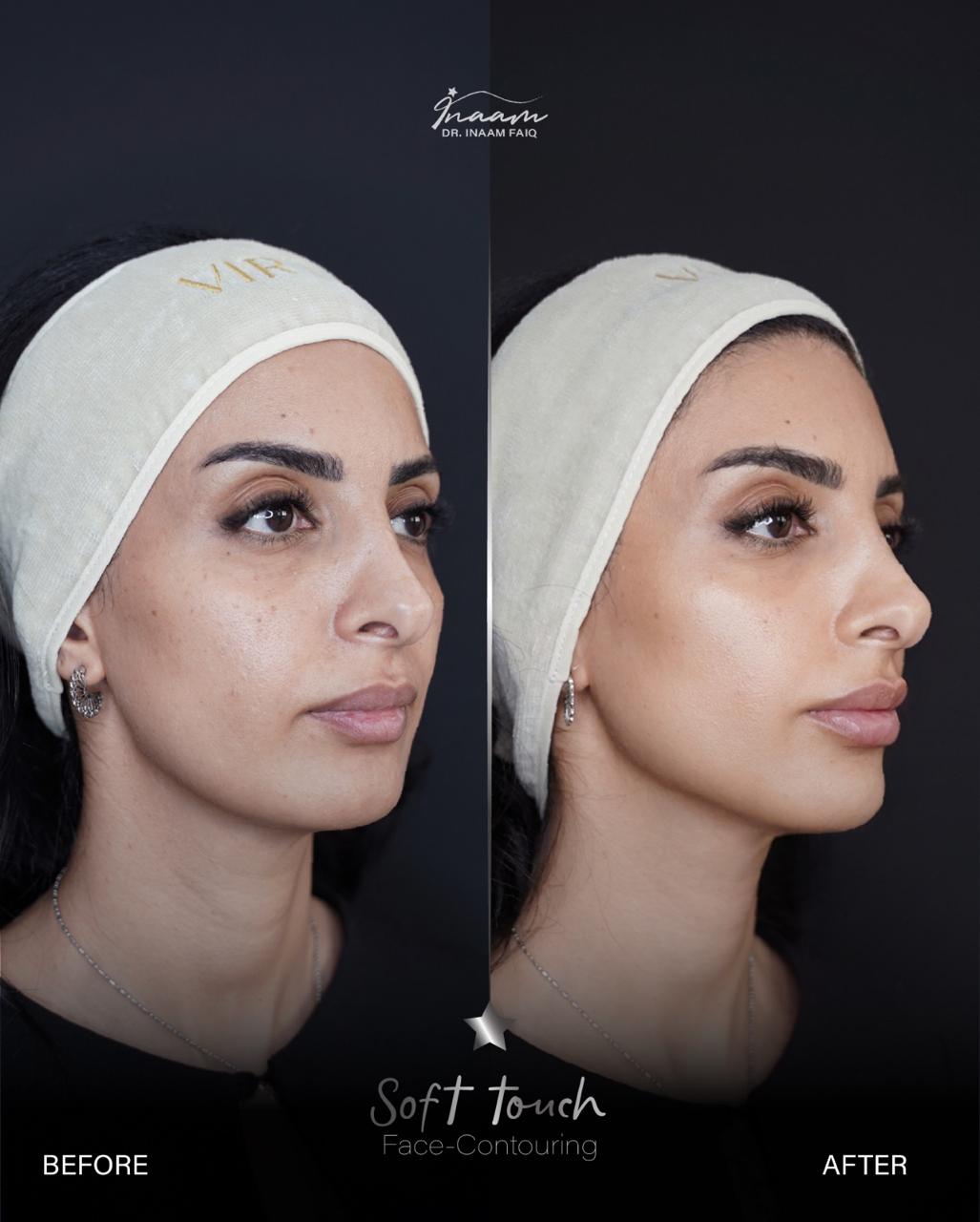
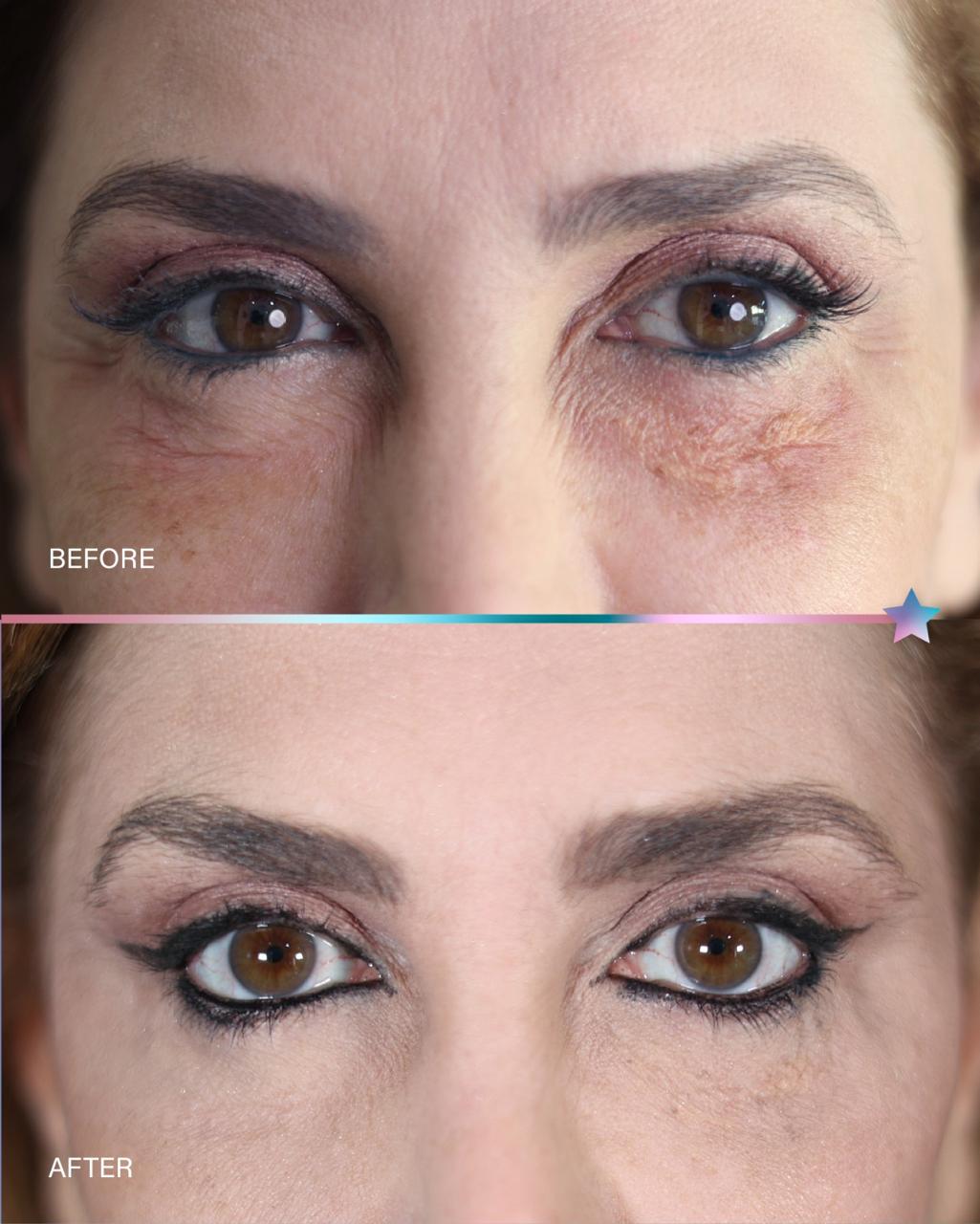
Laser & Energy · Dubai Healthcare City
CO2 fractional laser in Dubai — resurfacing at the gold standard.
The most powerful skin resurfacing available without surgery: fractional CO2 removes damaged skin in microscopic columns, triggering fresh skin and new collagen — for scars, deep lines and sun damage.
30–60 min session5–7 days downtime1–3 sessions3–6 months collagen builds

For skin damage that gentler treatments can't reach.
CO2 fractional laser is the treatment Dr. Inaam reserves for concerns that need real resurfacing power:
Each chip opens a WhatsApp chat about that exact concern — Dr. Inaam will tell you honestly whether this treatment is the right answer for you.
Maximum power demands maximum judgement.
CO2 is the strongest tool in aesthetic laser medicine — which is exactly why it belongs in experienced hands. Dr. Inaam calibrates density and depth to your skin type and concern, and will honestly tell you when a gentler option (like Morpheus8) would achieve your goal with less downtime.
Every CO2 treatment comes with her structured aftercare protocol and direct follow-up through the healing week — because half the result is made in the seven days after the laser.
01
Consultation & prep
Skin assessment, realistic expectations, and a prep routine to prime your skin.
02
Numbing
Strong topical anaesthetic for 30–45 minutes before treatment.
03
The treatment
30–60 minutes of fractional resurfacing, tuned to your skin and concern.
04
Healing & reveal
5–7 days of peeling with guided aftercare — then the glow, improving for months.
How CO2 Fractional Laser Works: The Science Behind Skin Resurfacing
Of all the laser technologies I have worked with over the course of my career, the carbon dioxide fractional laser remains the single most powerful resurfacing tool available to a clinician. When patients come to me with deep acne scars, pronounced sun damage, or skin texture that has not responded to gentler interventions, this is the modality I turn to—and I want to explain exactly why.
The 10,600 nm wavelength: why carbon dioxide is the gold standard
Every laser is defined by its wavelength, which determines which biological structures absorb its energy. The CO2 laser emits light at 10,600 nanometres, a wavelength in the far-infrared spectrum that is absorbed almost exclusively by water molecules in tissue. Because the skin’s superficial layers—the epidermis and upper dermis—are approximately 70 percent water, this wavelength is extraordinarily efficient at vaporising damaged tissue in a controlled, layer-by-layer fashion. No other commercially available laser wavelength achieves the same depth of ablation with the same precision, which is why CO2 has retained its status as the gold standard for ablative resurfacing since its introduction decades ago.
I explain to patients that when we say “ablative,” we mean the laser physically removes thin columns of tissue rather than merely heating it from below. This distinction matters. Ablative energy eliminates old, damaged cells outright and compels the body to rebuild from the foundation up, producing results that non-ablative devices simply cannot match for severe textural concerns.
Fractional versus fully ablative: a critical evolution
Traditional fully ablative CO2 resurfacing—popular in the 1990s—removed the entire surface of the treated area. Results were dramatic, but so was the recovery: weeks of open, oozing skin, significant infection risk, and a meaningful chance of permanent pigment loss. The development of fractional delivery transformed the field.
At my clinic, the laser delivers thousands of microscopic columns of energy—each roughly 100 to 300 microns in diameter—into the skin. These columns, called microscopic treatment zones (MTZs), penetrate through the epidermis and into the dermis. Crucially, between every treated column there remains a bridge of completely intact, untreated tissue. These untouched bridges serve as reservoirs of healthy cells that immediately begin migrating into the wounded columns, dramatically accelerating healing and reducing the risk profile compared with full-field ablation.
I can adjust two key parameters to tailor the treatment: the density of the MTZs (what percentage of the skin surface is treated in a single session) and the depth of penetration. For a patient with mild sun damage who wants a shorter recovery, I may treat 15 to 20 percent of the surface at moderate depth. For deep ice-pick acne scars, I may increase both density and depth substantially, accepting a longer recovery in exchange for a more definitive result.
The wound-healing cascade: from controlled injury to new collagen
What happens after the laser has created these micro-injuries is where the real clinical benefit unfolds. The body responds with a highly orchestrated three-phase wound-healing cascade that I walk every patient through before treatment:
- Inflammation (Days 1–3) — The body recognises the thermal injury and floods the area with growth factors, cytokines, and immune cells. Blood flow increases, producing the redness and swelling patients experience. This phase is not a complication; it is the essential first signal that tells the body to begin repair.
- Proliferation (Days 3–21) — Fibroblasts—the cells responsible for manufacturing structural proteins—migrate into each micro-wound and begin laying down new collagen type III and fresh elastin fibres. New blood vessels form. The epidermis resurfaces from the edges of each MTZ inward, closing the micro-columns within days rather than weeks.
- Remodelling (Weeks 3–6 months) — This is the longest and, in many ways, the most important phase. The initial collagen type III gradually converts to the stronger, more organised collagen type I. Elastin cross-links tighten. The architecture of the dermis restructures itself into a denser, more uniform matrix. Patients often tell me their skin continues to look better at four or five months than it did at four or five weeks, and this extended remodelling phase is the reason.
Why fractional CO2 excels for deep scars, sun damage and textural irregularities
The depth of penetration that the 10,600 nm wavelength achieves—reaching well into the reticular dermis when needed—is what sets this laser apart for conditions that reside below the skin’s surface. Acne scars, particularly boxcar and rolling variants, involve tethered, fibrotic collagen bands deep in the dermis that superficial treatments cannot reach. Chronic photodamage produces disordered elastin accumulation (solar elastosis) in the mid-dermis. Fractional CO2 energy reaches these depths, disrupts the disorganised tissue, and triggers an ordered rebuilding process. It is, in the most literal sense, controlled demolition followed by reconstruction—and when performed with proper technique and appropriate patient selection, the results are among the most satisfying I see in my practice.
Your Recovery: Day by Day After CO2 Laser Treatment
I believe informed patients recover better. When you understand what to expect at each stage, you are less anxious, more compliant with aftercare, and ultimately achieve a better outcome. Here is the recovery timeline I review with every patient before we begin, based on a moderate-to-aggressive treatment of the full face.
Day 1–2: The acute phase
Immediately after treatment, your skin will look intensely red and feel very hot—patients commonly describe it as a severe sunburn. There will be noticeable swelling, particularly around the eyes and along the jawline. The treated surface has a slightly raw, glistening appearance because the outermost layer of epidermis has been ablated. I provide patients with a gentle, occlusive ointment to apply continuously during these first 48 hours; keeping the micro-wounds moist is essential for optimal healing and comfort. Cool compresses applied for 10 to 15 minutes at a time offer significant relief from the heat sensation. Most patients manage discomfort well with over-the-counter analgesics, though I prescribe stronger medication when needed. Sleep with your head elevated on an extra pillow to minimise morning swelling.
Days 3–5: Peeling begins
By the third day, the acute heat typically subsides, but the skin begins to feel very tight and dry as the first wave of peeling starts. You will notice thin, brownish flakes lifting away from the surface. This is the expected desquamation of the treated micro-columns and should not be pulled or picked—let it shed naturally. Redness remains pronounced. Continue applying the recommended ointment or transition to the gentler moisturiser I prescribe at your follow-up visit, depending on how your skin is progressing. Some patients experience mild itching during this phase, which is a normal part of the healing response.
Days 5–7: New skin emerges
By the end of the first week, most of the visible peeling has completed. The new skin underneath is pink and delicate but intact. Many patients feel comfortable returning to indoor work and non-strenuous activities at this point, although the pinkness is still quite apparent and most people prefer to wait a few more days before resuming public-facing commitments. I see patients for a follow-up around day five to seven to assess healing, confirm there are no signs of infection, and adjust the aftercare regimen as needed.
Week 2: Transitioning back to routine
During the second week, the intense pinkness begins to fade toward a milder rosiness. Most patients can apply mineral-based makeup at this stage to camouflage residual redness, though I advise against conventional cosmetics that may contain irritants. Sun avoidance remains absolutely critical—the new skin has very little melanin protection and is exceptionally vulnerable to ultraviolet-induced hyperpigmentation. I cannot overstate this: even brief, unprotected sun exposure during this period can cause pigmentation problems that take months to resolve. A broad-spectrum SPF 50+ sunscreen, reapplied every two hours when outdoors, is mandatory.
Weeks 3–6: Visible improvement accelerates
This is when patients begin to feel genuinely excited. The surface redness continues to diminish week by week. Skin texture feels smoother and more uniform. Fine lines that were present before treatment are visibly reduced. Scars begin to appear shallower and less defined. What you are witnessing is the proliferative phase of wound healing transitioning into early remodelling—new collagen is being laid down and the dermal matrix is tightening. Many patients tell me around the four-week mark that their skin already looks better than it has in years.
Months 2–6: The deep remodelling dividend
The most underappreciated aspect of fractional CO2 treatment is that improvement does not stop when the surface has healed. Deep collagen remodelling continues for four to six months after a single session. During this period, the initial collagen type III progressively converts to the stronger, more structured collagen type I. Scar depth continues to decrease. Pore size refines. Overall skin firmness and elasticity improve in ways that become increasingly apparent over time. I tell patients to take standardised photographs at monthly intervals so they can objectively appreciate these gradual but meaningful changes.
It is important to acknowledge honestly that the downtime associated with fractional CO2 is substantially longer than what patients experience with non-ablative lasers, radiofrequency micro-needling, or chemical peels. I do not minimise this. However, the depth and durability of the results are proportionally greater. For patients whose concerns warrant it, the trade-off is well justified.
Safety, Contraindications and What to Expect
Patient safety is the foundation on which every treatment decision in my practice is built. Fractional CO2 laser resurfacing is a powerful tool, and like all powerful tools, it demands careful patient selection, thorough pre-treatment preparation, and meticulous post-treatment management. Here is how I approach each of these considerations.
Who is a good candidate
The ideal candidate for fractional CO2 laser treatment presents with one or more of the following concerns that have not responded adequately to less aggressive interventions:
- Moderate to severe acne scarring — particularly boxcar, rolling, or mixed-morphology scars with textural depth
- Photodamage and solar lentigines — chronic sun damage with irregular pigmentation, roughened texture, and fine-to-moderate rhytides
- Surgical or traumatic scars — mature scars that would benefit from surface remodelling
- Generalised skin laxity and textural irregularity — patients seeking meaningful improvement in skin quality and firmness
From a skin type perspective, patients with Fitzpatrick skin types I through IV are generally good candidates. I assess every patient individually, but lighter skin types carry a lower risk of post-inflammatory hyperpigmentation (PIH), which allows me to treat more aggressively when clinically appropriate. Realistic expectations are essential—I spend considerable time during consultations ensuring patients understand both the potential and the limitations of any single session.
Who should not have CO2 laser treatment
There are clear contraindications that I screen for rigorously:
- Active skin infections — bacterial, viral (including active herpes simplex), or fungal infections in the treatment area must be fully resolved before treatment. I routinely prescribe prophylactic antiviral medication for patients with a history of cold sores.
- Recent isotretinoin use — patients who have taken isotretinoin (Accutane) within the preceding 6 to 12 months have impaired wound healing due to the drug’s effect on sebaceous gland function and dermal repair mechanisms. I require a minimum washout period before proceeding.
- Fitzpatrick skin types V–VI — very dark skin carries a significantly elevated risk of post-inflammatory hyperpigmentation and, in some cases, hypopigmentation following ablative laser treatment. The 10,600 nm wavelength is absorbed by water rather than melanin directly, but the thermal injury still triggers melanocyte dysregulation in melanin-rich skin. For these patients, I typically recommend alternative approaches such as radiofrequency micro-needling or non-ablative fractional lasers that carry a more favourable risk profile.
- Keloid-prone skin — patients with a documented history of keloid or hypertrophic scar formation face an elevated risk of abnormal scarring from any ablative procedure.
- Pregnancy and breastfeeding — as with most elective medical procedures, I defer treatment until after pregnancy and the breastfeeding period.
- Unrealistic expectations — this may seem like a soft criterion, but I consider it a genuine contraindication. A patient who expects one session to produce flawless, poreless skin is not yet ready for this treatment, regardless of how suitable their skin type may be.
Fitzpatrick skin type assessment: especially important in Dubai
Dubai’s population is extraordinarily diverse, and my patient base spans the full Fitzpatrick spectrum. This makes careful skin type assessment not merely routine but critical for every laser consultation. I evaluate not only the patient’s baseline skin colour but also their tanning history, ethnic background, and any prior episodes of post-inflammatory pigment change. For patients in the Fitzpatrick III–IV range—which includes many of my patients of Arab, South Asian, and Southeast Asian heritage—I often employ conservative parameters, treat in multiple sessions rather than a single aggressive pass, and institute a pre-treatment regimen that includes topical agents to suppress melanocyte activity.
Pre-treatment preparation
- Discontinue retinoids — topical retinoids (tretinoin, adapalene) should be stopped at least 5 to 7 days before treatment to reduce the risk of excessive irritation and impaired re-epithelialisation.
- Minimise sun exposure — patients should avoid deliberate tanning and use diligent sun protection for at least four weeks before the procedure. Tanned skin increases the risk of pigmentary complications.
- Prophylactic antivirals — I prescribe a course of antiviral medication beginning one to two days before treatment for any patient with a history of herpes simplex, as laser resurfacing can trigger reactivation.
- Skin priming — for appropriate candidates, I may recommend a short course of a topical brightening agent in the weeks preceding treatment to reduce baseline melanocyte activity.
Post-treatment care
- Sun avoidance is non-negotiable — broad-spectrum SPF 50+ sunscreen, physical barriers (hats, shade), and avoidance of peak UV hours for a minimum of three months post-treatment.
- Prescribed ointments and moisturisers — I provide a specific aftercare protocol tailored to each patient’s healing stage. Occlusive ointment during the first 48 to 72 hours, transitioning to a gentle, barrier-repairing moisturiser thereafter.
- No picking, scratching, or exfoliating — the peeling skin must be allowed to shed naturally. Premature removal risks scarring and pigmentation.
- Follow-up visits — I schedule follow-up appointments at approximately one week and one month to monitor healing and intervene early if any concerns arise.
Why a hospital setting matters
I perform CO2 fractional laser treatments at the American Academy of Cosmetic Surgery Hospital (AACSH) in Dubai Healthcare City. This is a deliberate choice. A fully regulated hospital environment provides immediate access to emergency protocols, sterile procedure rooms, proper anaesthesia support when needed, and the oversight of the Dubai Health Authority (DHA). For a procedure that involves controlled thermal injury to the skin, these are not luxuries—they are safety fundamentals. Patients should always ask where their laser procedure will be performed and what clinical support is available in the unlikely event of a complication.
Clinical Evidence and References
Fractional laser technology is supported by a substantial and growing body of peer-reviewed clinical evidence. I believe patients benefit from understanding the scientific foundation of any procedure they are considering, and I am happy to discuss these studies in detail during consultations. Below are several landmark publications that have shaped the field and inform my clinical approach.
Foundational and landmark studies
- Manstein et al. (2004) — “Fractional Photothermolysis: A New Concept for Cutaneous Remodeling Using Microscopic Patterns of Thermal Injury,” published in Lasers in Surgery and Medicine. This is the seminal paper that introduced the concept of fractional laser delivery. Manstein and colleagues at the Wellman Center for Photomedicine demonstrated that creating microscopic columns of thermal damage surrounded by intact tissue could achieve meaningful dermal remodelling while dramatically reducing downtime and complications compared with full-field ablation. This paper fundamentally changed the trajectory of laser dermatology.
- Hantash et al. (2007) — “In Vivo Histological Evaluation of a Novel Ablative Fractional Resurfacing Device,” published in Lasers in Surgery and Medicine. Hantash and colleagues provided critical histological evidence that ablative fractional devices could produce controlled columns of tissue vaporisation with predictable depth and diameter, confirming the clinical rationale for fractional CO2 resurfacing and demonstrating the wound-healing response at a microscopic level.
- Alexiades-Armenakas et al. (2008) — “Fractional Carbon Dioxide Laser Resurfacing for Skin Rejuvenation,” published in the Journal of Drugs in Dermatology. This study documented significant improvement in photodamaged skin treated with fractional CO2 laser, including measurable reduction in rhytides, dyschromia, and textural irregularities. It provided some of the earliest clinical outcome data supporting the adoption of fractional CO2 for photoaging indications.
- Wat et al. (2014) — “Application of Carbon Dioxide Laser in the Treatment of Acne Scarring: A Systematic Review,” published in the Journal of Cosmetic Dermatology. This systematic review pooled data from multiple clinical trials and consistently demonstrated that fractional CO2 laser treatment produces statistically and clinically significant improvement in acne scar severity, with the majority of patients achieving 50 to 75 percent improvement after one to three sessions. The review also confirmed an acceptable safety profile when performed with appropriate patient selection.
Regulatory status
CO2 fractional laser devices have received clearance from the United States Food and Drug Administration (FDA) for dermatological use, including skin resurfacing, treatment of wrinkles, and scar revision. FDA clearance indicates that the device has demonstrated a reasonable assurance of safety and effectiveness for its intended indications through the 510(k) regulatory pathway. In Dubai, all laser devices and medical procedures are regulated by the Dubai Health Authority (DHA), which establishes standards for device approval, facility accreditation, and practitioner credentialing. My practice operates within a DHA-licensed facility and adheres to all regulatory requirements governing laser treatments in the emirate.
A commitment to evidence-based practice
I share these references not to overwhelm patients with academic literature, but to underscore a principle that guides my practice: every treatment I offer must be supported by credible clinical evidence. Aesthetic medicine exists at the intersection of science and art, and the best outcomes emerge when both are honoured. I stay current with the evolving literature, attend international dermatology and laser conferences, and continually refine my protocols based on the best available evidence.
If you are considering CO2 fractional laser treatment and would like to discuss whether it is appropriate for your specific concerns, I welcome you to schedule a consultation. During our meeting, I will assess your skin type, review your medical history, discuss realistic outcomes, and help you make a fully informed decision about whether this treatment aligns with your goals.
Real Procedure Results
View the results gallery → Results from Dr. Inaam's happy patients.
Browse unretouched before & after results from Dr. Inaam's patients across all treatments.
Everything patients ask before booking.
How much downtime should I plan for?
5–7 days of redness, swelling and peeling — plan it around your social calendar. By day 7 most patients wear makeup again; the fresh-skin glow appears from week 2.
Is it painful?
With strong numbing the treatment itself is very tolerable — a hot, prickling sensation. The days after feel like a strong sunburn, managed with the aftercare kit.
How many sessions do I need?
Many concerns improve dramatically in a single session. Deep acne scarring may benefit from 2–3 sessions spaced 2–3 months apart.
When will I see the final result?
The surface heals in a week, but collagen keeps rebuilding for 3–6 months — the result at month 3 is better than at month 1.
Is it safe for my skin tone?
CO2 carries pigmentation risk on deeper skin tones, which is why Dr. Inaam assesses your skin type first — and recommends colour-safe alternatives like Morpheus8 where appropriate.
What is the aftercare?
A structured 7-day protocol: healing balm, gentle cleansing, strict sun protection, and a direct line to Dr. Inaam throughout. Full written instructions are provided.