Injectables · Dubai Healthcare City
Sculptra in Dubai — your own collagen, rebuilt gradually.
Sculptra is a collagen biostimulator: instead of filling, it trains your skin to rebuild its own structure — for firmness and youthful contours that arrive gradually and last for years.
30–45 min per session2–3 sessions typical6–12 weeks to visible results2+ years duration

For faces that need structure back — not just filling.
Sculptra suits gradual, global rejuvenation rather than spot corrections. It is Dr. Inaam's choice when the issue is overall firmness and volume loss:
Loss of facial volume Sagging & laxity Sunken cheeks & temples Jawline softening Thin, crepey skin Post-weight-loss face
Each chip opens a WhatsApp chat about that exact concern — Dr. Inaam will tell you honestly whether this treatment is the right answer for you.
Biostimulators reward patience — and punish poor technique.
Sculptra works deep in the skin, so placement and dilution matter more than with any filler. Dr. Inaam has worked with collagen biostimulators for years: she plans your full course upfront — how many sessions, where, and what to expect at each stage.
The result is your own collagen, not a product sitting under the skin: firmer, thicker, better-looking skin that improves for months and lasts two years or more. Subtle enough that nobody asks — noticeable enough that everybody comments.
01
Consultation
Is Sculptra right for you, or would fillers serve better? An honest assessment first.
02
Course plan
Sessions, areas and timing mapped out — typically 2–3 sessions, 4–6 weeks apart.
03
The sessions
30–45 minutes each, with numbing. Simple massage instructions to follow at home.
04
Gradual results
Collagen builds over 6–12 weeks and keeps improving — reviewed personally by Dr. Inaam.
How Sculptra Works: The Science of Collagen Biostimulation
One of the most common questions I hear in consultation is: "Can you restore volume without making me look filled?" It is a reasonable concern. Traditional dermal fillers — hyaluronic acid gels, calcium hydroxylapatite — work by physically occupying space beneath the skin. They are excellent tools, and I use them regularly. But they operate on a fundamentally different principle than Sculptra, and understanding that distinction is essential to understanding why I recommend it for certain patients.
Sculptra's active ingredient is poly-L-lactic acid, or PLLA. It is a biocompatible, biodegradable synthetic polymer — the same class of material used in dissolvable sutures for decades. When I inject PLLA into the deep dermis or subcutaneous tissue, it does not fill anything. It does not add volume in the way a hyaluronic acid filler does. Instead, it initiates a biological process: it convinces your body to rebuild collagen that has been lost to time.
This is what we mean by collagen biostimulation, and the mechanism unfolds in three distinct phases.
Phase One: The Scaffold (Day of Treatment)
When I inject Sculptra, the PLLA microparticles — each roughly 40 to 63 microns in diameter — disperse through the target tissue and create a three-dimensional scaffold within the deep dermal and subcutaneous layers. The suspension also contains sterile water and mannitol, which provide temporary volume at the time of injection. Think of this scaffold as architectural framework: it establishes the structure around which your body will build.
Phase Two: The Biological Response (Weeks 1 to 6)
Over the following weeks, your immune system recognises the PLLA microparticles as foreign but non-threatening. Macrophages — specialised immune cells — surround each particle in a controlled subclinical inflammatory response. This is not a complication; it is the intended mechanism. These macrophages recruit and activate fibroblasts, the cells responsible for synthesising collagen. The fibroblasts begin laying down new collagen fibres around and between the PLLA particles, creating a network of structural protein where volume had been depleted.
Phase Three: Collagen Replacement (Months 2 to 24)
As the PLLA particles gradually biodegrade — broken down through hydrolysis into lactic acid, carbon dioxide, and water, all of which the body metabolises naturally — they are progressively replaced by newly formed type I and type III collagen. The scaffold disappears; what remains is your own tissue. This is why I describe Sculptra to my patients not as a filler, but as a rebuilding treatment. The final volume is composed of collagen your body has produced, not a synthetic material sitting beneath the skin.
The gradual nature of this process is, I believe, one of Sculptra's greatest advantages. Results emerge over months, not minutes. For many of my patients — particularly those in professional or social environments where a sudden change in appearance would be unwelcome — this progressive improvement is precisely what they want. Colleagues and friends notice that you look well, rested, refreshed. They do not notice that you have had a procedure. The change integrates naturally because it is natural: it is your own collagen.
Facial ageing is not simply a matter of skin laxity or wrinkles. One of the most significant — and least discussed — contributors to an aged appearance is structural volume loss. The deep fat pads of the midface atrophy and descend. The temples hollow. The jawline loses definition as underlying support diminishes. Collagen production, which peaks in our mid-twenties, declines at roughly one to two percent per year thereafter. By the time a patient sits in my consultation room at fifty or fifty-five, they may have lost thirty to forty percent of their dermal collagen. Sculptra addresses this foundational deficit directly.
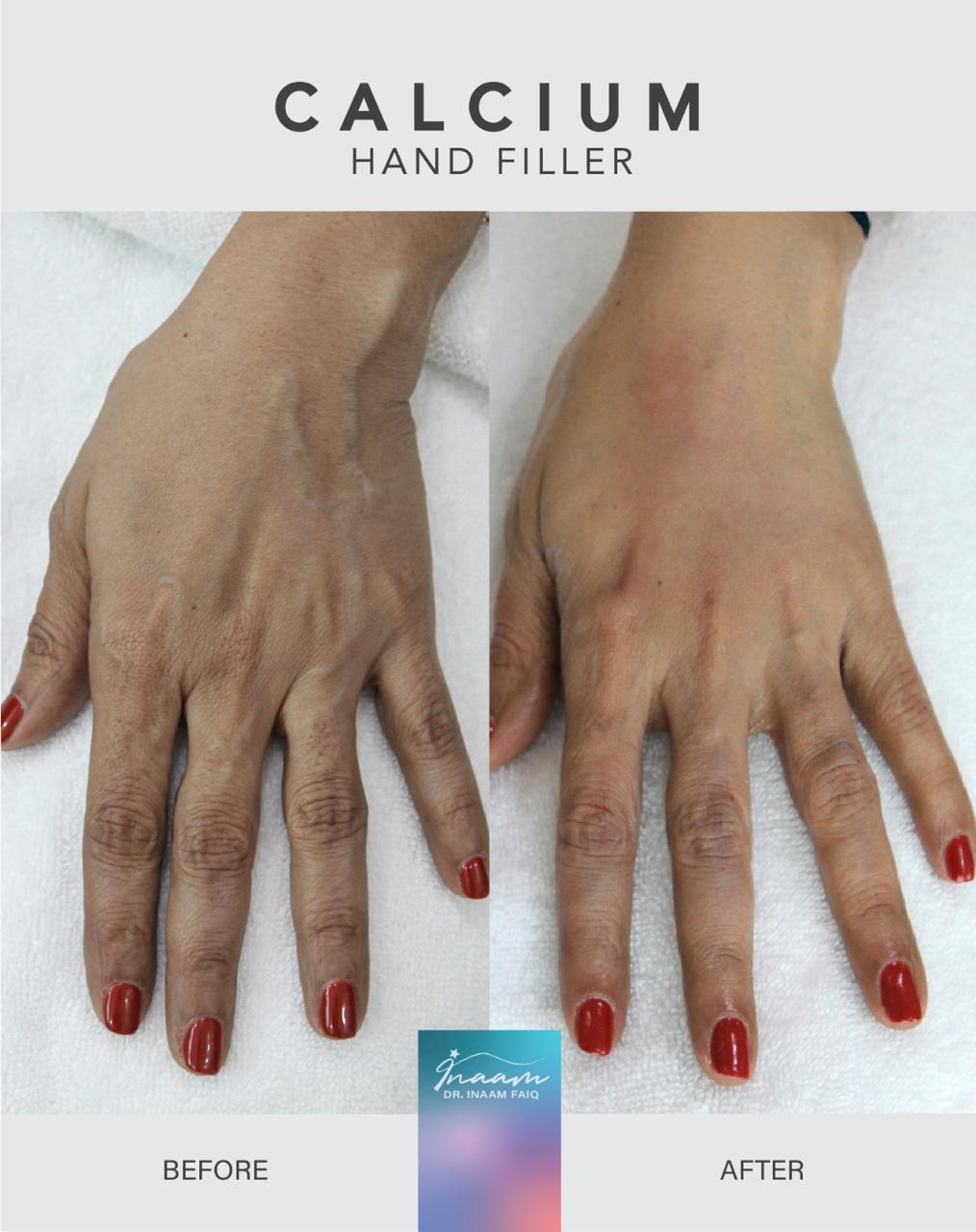
In my practice at the American Academy of Cosmetic Surgery Hospital in Dubai Healthcare City, I use Sculptra across a range of treatment areas: the temples, where hollowing creates a gaunt or fatigued appearance; the cheeks and midface, where fat pad atrophy leads to flattening and descent; the jawline and chin, where volume loss diminishes structural definition; the pre-jowl sulcus, where tissue depletion contributes to early jowl formation; and the dorsum of the hands, where collagen loss exposes underlying tendons and veins.
I choose Sculptra for specific patient profiles. If someone presents with significant, diffuse facial volume loss — the kind that cannot be adequately or naturally addressed with a syringe or two of hyaluronic acid filler — Sculptra is often the more appropriate foundation. If a patient tells me they want improvement but cannot tolerate the idea of looking "done" at any stage of the process, Sculptra's gradual mechanism aligns with their expectations. And for patients who value longevity and prefer fewer maintenance appointments over the years, Sculptra's durability — results lasting two years or more — makes it an exceptionally efficient treatment.
Your Sculptra Journey: Timeline from Treatment to Final Results
I find that patients who understand the full timeline of Sculptra — who know what to expect at each stage — are consistently the most satisfied with their results. This is not a treatment where you walk out of the clinic and see the final outcome in the mirror. It requires patience, trust in the biological process, and clear communication between doctor and patient. Here is exactly what that journey looks like.
Before Treatment: Preparation and Reconstitution
Sculptra arrives as a lyophilised (freeze-dried) powder and must be reconstituted with sterile water well before the day of your appointment. In my practice, I reconstitute each vial a minimum of 24 to 72 hours in advance, allowing the PLLA microparticles to fully hydrate. This is not a step that can be rushed. Adequate hydration time and the correct dilution volume are directly linked to the smoothness of the final result and the reduction of potential complications. By the time you arrive for treatment, the product has been properly prepared and is ready for injection.
During Treatment
After cleansing the skin and applying topical anaesthetic — or in some cases using local anaesthetic at specific entry points — I inject Sculptra into the target areas using either a cannula or needle technique, depending on the region being treated and the depth required. I use a fanning distribution pattern with each pass, depositing small aliquots of the suspension evenly throughout the tissue plane. This ensures uniform collagen stimulation rather than focal deposits. The treatment typically takes 30 to 45 minutes.
Immediately After Treatment
When you look in the mirror immediately after your session, you will see volume. Your temples may look fuller, your cheeks more defined. I need you to understand: this is not the Sculptra working yet. What you are seeing is the water component of the reconstituted suspension. It creates temporary volume that will be absorbed by your body within the first few days. I show patients their reflection at this stage intentionally — it offers a preview of the direction we are heading, but it is not the destination.
Days 1 to 3: Swelling and the Massage Protocol
Mild to moderate swelling is expected during the first 48 to 72 hours, along with possible tenderness at the injection sites. Some patients experience minor bruising. This is where your most important at-home responsibility begins: the 5-5-5 massage protocol. I instruct every patient to massage the treated areas firmly for five minutes, five times per day, for five consecutive days. This massage distributes the PLLA particles evenly through the tissue, preventing them from clustering in concentrated deposits — which is the primary mechanism for avoiding palpable nodules.
Days 3 to 7: The Valley
As swelling resolves and the water component absorbs, your face will appear to return to its pre-treatment baseline. Some patients describe this as the "valley" — you saw improvement, and now it seems to have vanished. This is entirely expected and is not a sign that the treatment has failed. The PLLA microparticles are in place, silently doing their work. I prepare every patient for this phase, because it is the moment where understanding the science prevents unnecessary worry.
Weeks 2 to 6: The Quiet Phase
During this period, the PLLA scaffold is established and the controlled inflammatory response is activating your fibroblasts. You will not see dramatic changes in the mirror. Collagen synthesis is underway at a cellular level, but it has not yet accumulated enough to produce visible volume restoration. Patience here is essential.
Months 2 to 4: Visible Improvement Begins
This is the stage where patients begin to notice change. The face gradually appears fuller, more defined, more rested. Skin quality often improves as well — new collagen in the dermis can improve skin texture, thickness, and firmness. The improvement is subtle week to week, but when patients compare photographs from their initial consultation to their appearance at three or four months, the difference is clear.
Months 6 to 12: Progressive Refinement
Collagen production continues well beyond the initial months. Many patients report that their results continue to improve through the six- to twelve-month mark. This is when the final outcome becomes fully apparent — natural, balanced, and structurally sound.
The Full Treatment Protocol
Sculptra is not typically a single-session treatment. Most patients require two to three treatment sessions, spaced approximately four to six weeks apart. I assess progress at each visit and adjust volumes and injection sites accordingly. This staged approach allows me to build volume gradually and symmetrically, layering collagen stimulation in a controlled fashion.
The longevity of Sculptra is exceptional. Clinical studies and my own patient experience confirm that results last two years or more, making it one of the longest-lasting non-surgical aesthetic treatments available. After the initial treatment series, I recommend an annual maintenance session — typically a single vial — to sustain results and offset ongoing age-related collagen loss.
Safety, Candidacy and What to Know Before Sculptra
Patient safety governs every clinical decision I make, and candidacy for Sculptra is no exception. While it is an excellent treatment for the right individual, it is not appropriate for everyone, and there are important considerations I discuss with every patient before proceeding.
Who Is an Ideal Candidate?
The patients who benefit most from Sculptra typically share one or more of the following characteristics:
- Significant facial volume loss — particularly diffuse loss across multiple areas of the face, where addressing the deficit with hyaluronic acid fillers alone would require excessive product volumes or produce an unnatural result
- A preference for gradual, natural-looking change — patients who want improvement that unfolds over months rather than appearing overnight
- Age range typically 35 to 65 and beyond — though candidacy is determined by tissue quality and volume loss, not by a number on a chart
- Patients who value treatment longevity — those who prefer a two-year result over treatments requiring maintenance every six to twelve months
Sculptra vs. Hyaluronic Acid Fillers: Choosing the Right Tool
I am often asked whether a patient should choose Sculptra or hyaluronic acid fillers. In my practice, the answer is frequently both. These are complementary tools, not competing ones. Sculptra excels at restoring foundational volume — think of it as rebuilding the deep structural support of the face. Hyaluronic acid fillers are better suited for precise, targeted corrections: refining lip contours, softening a specific fold, or adding definition to a discrete area. Many of my treatment plans begin with Sculptra to re-establish the volumetric foundation, followed by small amounts of HA filler to refine specific details once collagen remodelling is complete.
Who Should Avoid Sculptra
I will not treat with Sculptra in the following circumstances:
- Active skin infections at or near the intended treatment site
- Autoimmune connective tissue disorders — conditions such as systemic lupus or scleroderma may produce unpredictable inflammatory responses to the PLLA microparticles
- Known allergy to PLLA or any component of the Sculptra formulation
- Pregnancy or breastfeeding — as with most injectable treatments, Sculptra has not been studied in this population and should be deferred
- Patients with a history of keloid or hypertrophic scarring — the foreign-body response that makes Sculptra effective could, in keloid-prone individuals, produce exaggerated tissue reactions
Critical Anatomical Considerations
Sculptra should not be injected into the lips, the periorbital area, or the tear troughs. These regions have thin, mobile skin with minimal subcutaneous tissue, and PLLA deposits in these areas carry an unacceptable risk of visible or palpable nodule formation. This is a firm boundary in my practice, and any qualified Sculptra injector will observe the same restriction. The treatment is designed for areas with sufficient tissue depth to accommodate the collagen-building process — the temples, midface, jawline, and similar regions.
The Importance of the Massage Protocol
I cannot overstate this point: the post-treatment massage protocol is not optional. The 5-5-5 rule — five minutes of firm massage, five times daily, for five days — is the single most important action you can take to ensure smooth, even results and minimise the risk of nodule formation. Massage distributes the PLLA particles uniformly through the tissue. Patients who adhere diligently to this protocol have significantly better outcomes than those who treat it as a suggestion.
Expected Side Effects and Rare Complications
Common, expected effects include injection site tenderness, localised swelling, and occasional bruising. These resolve within three to seven days for the vast majority of patients. Rare complications include subcutaneous nodules — small, palpable but typically non-visible bumps beneath the skin. The incidence of nodules has decreased dramatically with modern reconstitution protocols (higher dilution volumes and longer hydration times) and proper injection technique. Granulomas — inflammatory nodules requiring medical treatment — are extremely rare with contemporary protocols, occurring in fewer than one percent of patients in recent studies.
Why Reconstitution and Technique Matter
The clinical outcomes of Sculptra are highly dependent on how the product is prepared and how it is injected. Higher dilution volumes produce smoother, more even distribution of PLLA particles. Adequate hydration time — a minimum of 24 hours, ideally 48 to 72 — ensures complete particle suspension. The injection technique must place product at the correct tissue depth, in appropriate volumes, with proper fanning distribution. This is why Sculptra requires specific training beyond general injectable certification. It is not a treatment that translates directly from experience with hyaluronic acid fillers.
The Advantage of a Hospital Setting
I perform all Sculptra treatments at the American Academy of Cosmetic Surgery Hospital (AACSH) in Dubai Healthcare City. This hospital setting provides advantages that a standalone clinic cannot: sterile preparation and storage facilities that ensure product integrity, trained nursing and support staff who assist during treatment, and the regulatory oversight that comes with operating within a DHA-licensed hospital. For a treatment where preparation protocol directly affects outcomes, this level of infrastructure matters.
Clinical Evidence and References
Sculptra is one of the most extensively studied biostimulatory injectables in aesthetic medicine. My clinical approach is informed by a body of peer-reviewed research that spans nearly two decades, and I believe patients deserve to know that the treatments they receive are grounded in evidence, not trend.
Regulatory History
Poly-L-lactic acid received its first FDA approval in 2004 under the brand name Sculptra, initially indicated for the treatment of HIV-associated facial lipoatrophy — the severe facial wasting that accompanied antiretroviral therapy. The dramatic, well-documented improvements in these patients demonstrated the power of collagen biostimulation in restoring lost facial volume. In 2009, the FDA granted expanded approval for cosmetic use under the name Sculptra Aesthetic, recognising its efficacy and safety profile for the correction of shallow to deep nasolabial fold contour deficiencies and other facial wrinkles in immunocompetent patients.
Key Studies Informing Clinical Practice
Fitzgerald and colleagues published a comprehensive systematic review in 2018 evaluating the use of poly-L-lactic acid for facial and non-facial rejuvenation. Their analysis of the available literature confirmed consistent efficacy in volume restoration with a favourable safety profile, particularly when modern dilution and injection protocols were followed. This review helped consolidate best-practice guidelines that I apply in my own treatments.
Vleggaar and Bauer (2015) contributed significantly to the refinement of Sculptra treatment protocols, detailing optimal reconstitution volumes, injection depths, and distribution techniques. Their work was instrumental in reducing the incidence of subcutaneous nodules — a complication that was more frequently reported in early clinical use when lower dilution volumes were standard practice. The protocols they described — higher dilution, longer hydration, and strict massage compliance — now form the foundation of safe Sculptra administration worldwide.
Schierle and Casas (2011) examined the role of injectable poly-L-lactic acid within the broader context of nonsurgical facial rejuvenation. Their research positioned Sculptra not as an alternative to surgical intervention, but as a complementary tool that addresses the volumetric component of facial ageing — an aspect that surgical lifting alone does not correct. This perspective aligns with my own philosophy of combining modalities to achieve comprehensive, natural-looking results.
Mest and Humble (2006) published early but important safety and efficacy data on PLLA for facial atrophy, providing foundational evidence for the long-term tolerability of the product. Their findings demonstrated sustained volume improvement over a 24-month follow-up period, with adverse events limited primarily to injection-site reactions that resolved without intervention.
Collectively, this evidence base — along with ongoing real-world clinical experience across thousands of practitioners globally — supports Sculptra as a safe, effective, and durable option for patients seeking meaningful facial volume restoration through a biologically integrated mechanism.
Discuss Sculptra with Dr. Inaam
If you are experiencing facial volume loss and are considering your options, I welcome the opportunity to assess whether Sculptra is appropriate for your specific anatomy and goals. Every treatment plan I design begins with a thorough consultation — evaluating your facial structure, discussing your expectations, and determining whether biostimulation, traditional fillers, or a combination approach will deliver the most natural, lasting result. To schedule a consultation at the American Academy of Cosmetic Surgery Hospital in Dubai Healthcare City, please get in touch with my clinic.
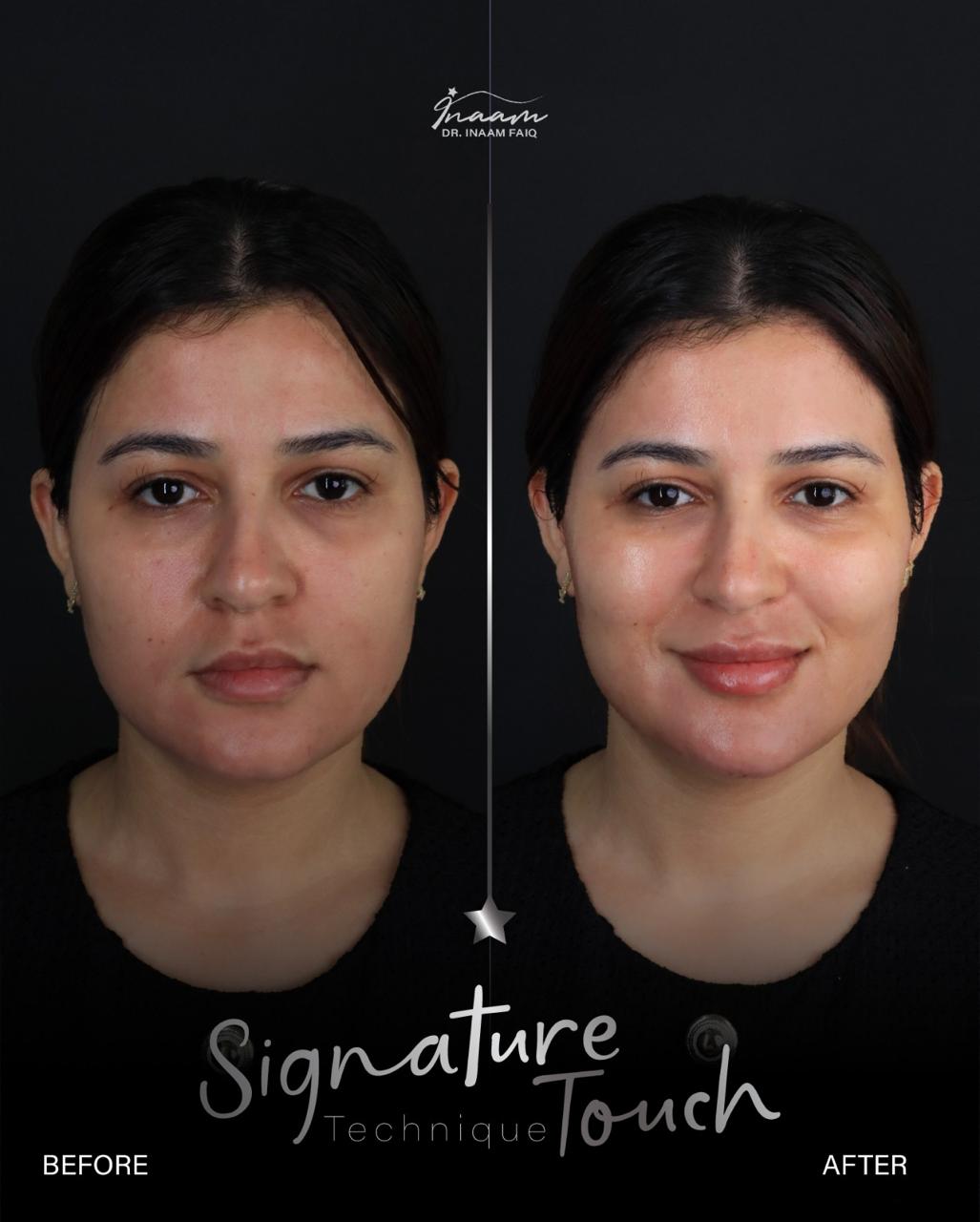
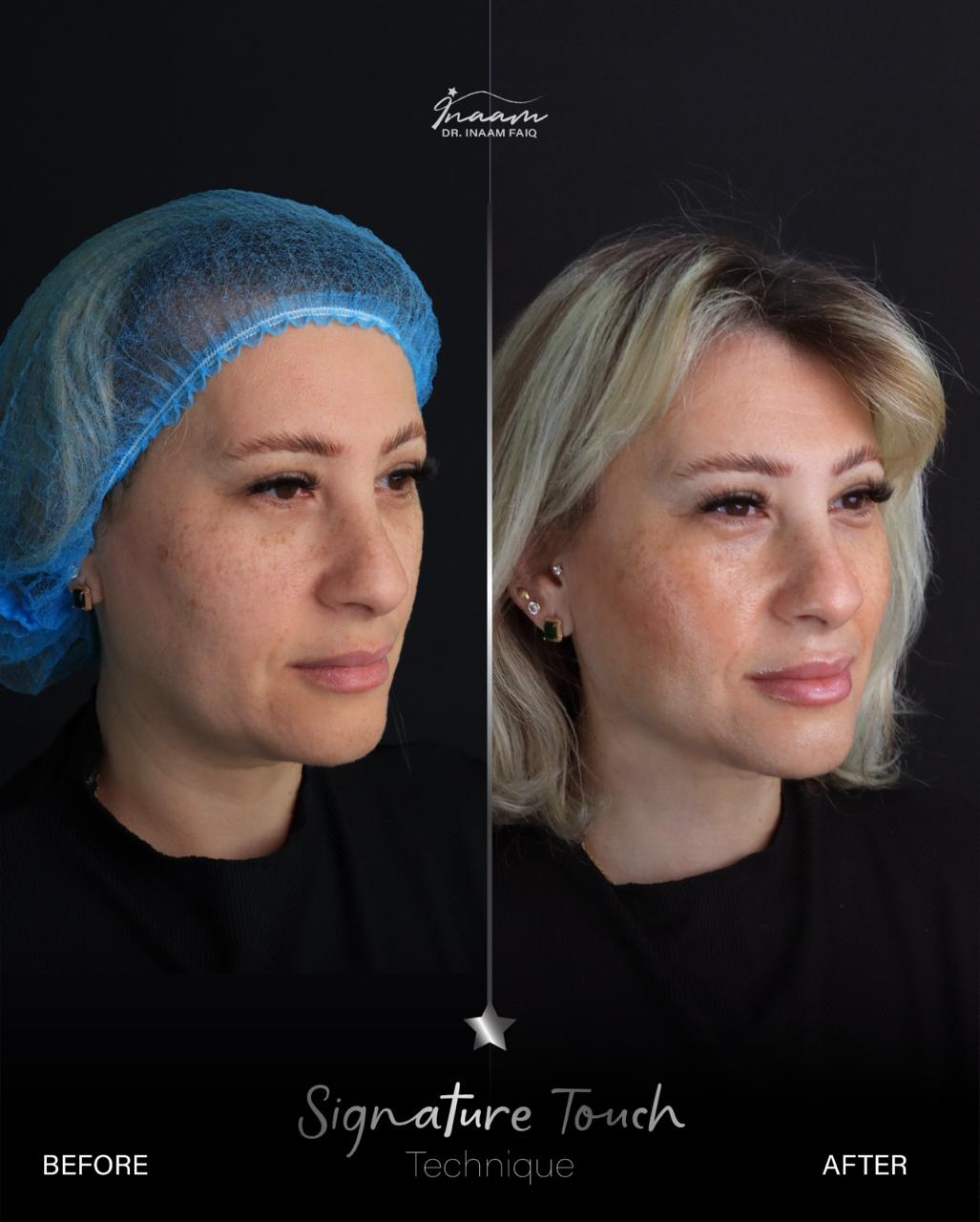
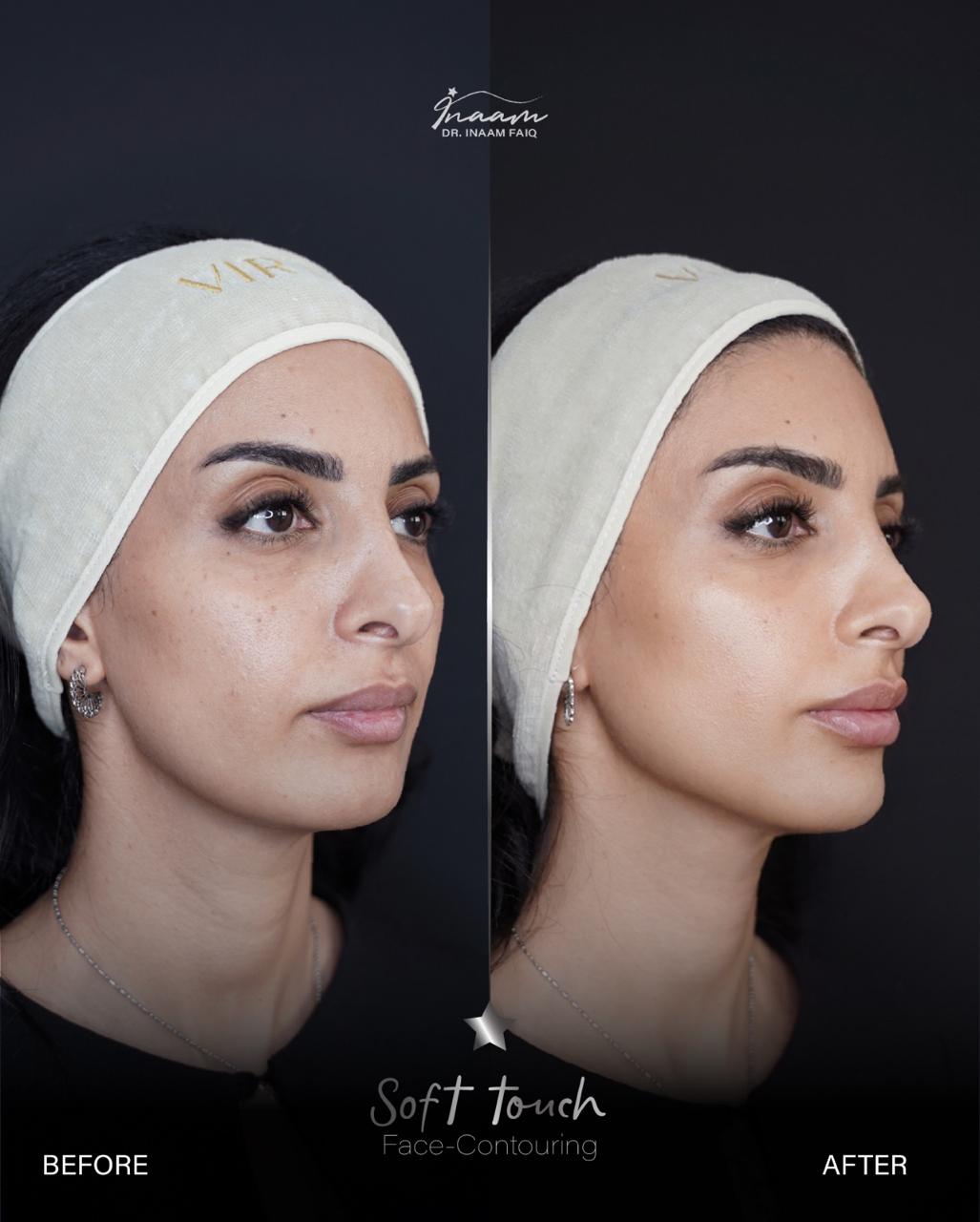
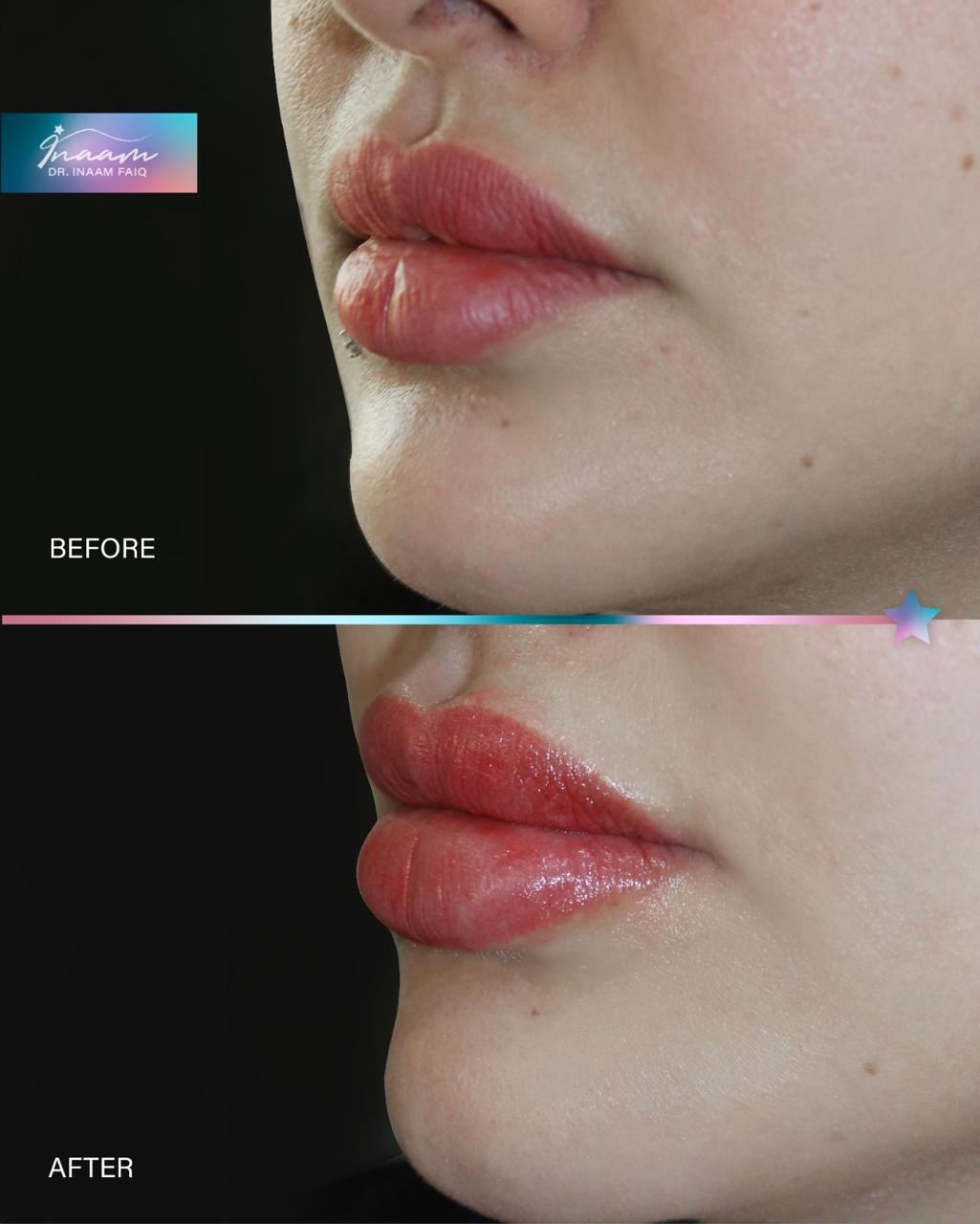
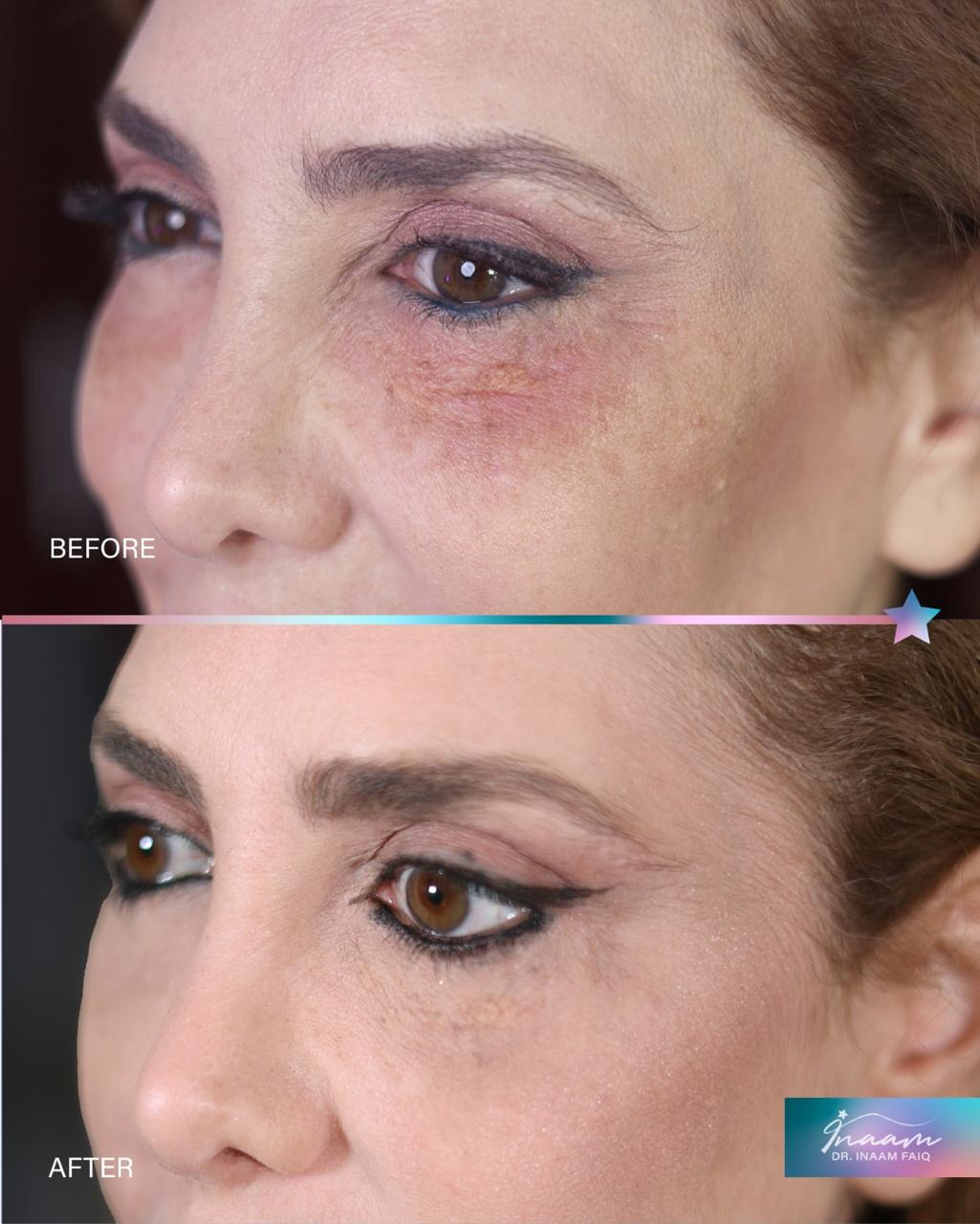
Real Procedure Results
View the results gallery → Results from Dr. Inaam's happy patients.
Browse unretouched before & after results from Dr. Inaam's patients across all treatments.
Everything patients ask before booking.
How is Sculptra different from fillers?
Fillers add volume instantly with a gel; Sculptra stimulates your skin to grow its own collagen over weeks. Fillers correct a spot — Sculptra rebuilds overall structure and skin quality.
When will I see results?
Gradually from around 6 weeks, with full results at about 3 months after your final session — and they continue improving after that.
How long does it last?
Typically two years or more, because the result is your own collagen rather than a product that dissolves.
How many sessions do I need?
Usually 2 to 3, spaced 4–6 weeks apart, depending on your age and degree of volume loss. Dr. Inaam plans the full course at consultation.
Is there downtime?
Minor swelling or bruising for a day or two is possible. You'll follow a simple self-massage routine for a few days to ensure an even result.
Will it look natural?
Sculptra is the most natural-looking injectable there is — the change arrives so gradually that people notice you look better without knowing why.