Laser & Energy · Dubai Healthcare City
Morpheus8 Pro in Dubai — skin remodelled from within.
Radiofrequency microneedling that reaches where creams and surface lasers can't — remodelling collagen deep in the skin to firm, smooth and contour. Safe for all skin tones.
45–60 min session1–3 days social downtime1–3 sessions3–12 weeks results build

One device, a remarkable range.
By combining microneedling with fractional radiofrequency at adjustable depths, Morpheus8 Pro treats concerns that used to need three different machines:
Skin laxity & sagging Texture & pores Acne scars Jawline & lower face Neck laxity Fine lines Under-chin fullness
Each chip opens a WhatsApp chat about that exact concern — Dr. Inaam will tell you honestly whether this treatment is the right answer for you.
The device is powerful. The depth settings are the skill.
Morpheus8 results depend entirely on who programs it: needle depth, energy level and pass pattern change per area and per patient. Dr. Inaam maps your face and sets each zone individually — deeper where remodelling is needed, gentler where skin is thin.
Because radiofrequency bypasses the skin surface, Morpheus8 is one of the safest remodelling options for all skin tones — including darker skin where many lasers carry pigmentation risk.
01
Consultation
Assessment of laxity, texture and scarring — and whether one session or a course fits your goal.
02
Numbing & prep
Strong topical numbing for 30–40 minutes so the session stays comfortable.
03
The treatment
45–60 minutes of fractional RF microneedling, depth-adjusted zone by zone.
04
Remodelling & review
Redness settles in 1–3 days; collagen builds for up to 3 months, reviewed by Dr. Inaam.
The Science Behind Morpheus8 Pro
Understanding how a treatment works is just as important as knowing what it can do for you. Morpheus8 Pro is not a single technology — it is the convergence of two clinically proven modalities, bipolar radiofrequency energy and precision microneedling, delivered simultaneously through a single handpiece. This dual mechanism is what sets it apart from standalone microneedling devices, standalone RF platforms, and energy-based treatments that act only on the skin's surface.
How Bipolar Radiofrequency and Microneedling Work Together
During a Morpheus8 Pro treatment, an array of ultra-fine, gold-plated needles penetrates the skin to a precisely programmed depth. These needles are coated with insulation along most of their length, with only the very tip left exposed. This insulation is a critical design feature: it means the needles pass through the epidermis — the outermost layer of skin where melanin resides — without depositing any thermal energy there. The radiofrequency energy is released only at the needle tip, deep within the dermis or subdermis, exactly where collagen and elastin remodelling needs to occur.
Once the needles reach their target depth, bipolar RF energy flows between adjacent needle pairs, generating controlled volumetric heating in the surrounding tissue. This thermal energy serves two immediate purposes. First, it causes existing collagen fibres to contract and tighten — a process you can sometimes appreciate as a subtle firmness even on the day of treatment. Second, it initiates a carefully calibrated wound-healing cascade that stimulates your body to produce fresh collagen (types I and III) and new elastin over the weeks and months that follow.
Adjustable Depth: Why Millimetres Matter
The Morpheus8 Pro platform allows me to adjust needle penetration in fine increments across a range of 0.5 mm to 8 mm. This is not a trivial technical detail — it fundamentally changes what the device can achieve. Consider the anatomy of the face alone: the skin around the eyes may be less than 1 mm thick, while the skin along the jawline and submental region sits above a substantial layer of subcutaneous fat. A single, fixed treatment depth simply cannot address both areas safely and effectively.
In my practice at Dubai Healthcare City, I create a detailed treatment map for every patient before we begin. I programme shallower depths (0.5 to 1.5 mm) for the delicate periorbital region and forehead, moderate depths (2 to 3 mm) for the cheeks and mid-face, and deeper settings (4 to 7 mm) for the jawline, jowls, neck, and body areas such as the abdomen and inner arms. This zone-by-zone customisation ensures that each tissue layer receives the precise amount of energy it needs — no more, no less. It is the difference between a treatment that is merely applied and one that is engineered for your anatomy.
The Collagen and Elastin Remodelling Process
The biological response to Morpheus8 Pro unfolds in three overlapping phases. In the inflammatory phase (days one to five), your body sends growth factors and repair cells to the treated tissue — this is the mild redness and warmth you may notice after your session. During the proliferative phase (weeks one to six), fibroblasts — the cells responsible for producing structural proteins — begin laying down new collagen and elastin within the dermal matrix. Finally, during the remodelling phase (months two to six and beyond), this new collagen matures and cross-links, progressively strengthening and tightening the skin from within.
This is why I always tell my patients that the results they see at four weeks are not the final result. The true transformation becomes visible between months three and six, as the remodelled collagen reaches its full structural integrity. It is a gradual, natural-looking improvement — your skin becomes firmer, smoother, and more defined without ever looking "done."
Safe for All Fitzpatrick Skin Types (I Through VI)
Many energy-based skin treatments — including certain lasers and intense pulsed light (IPL) devices — carry a meaningful risk of post-inflammatory hyperpigmentation (PIH) in patients with darker skin tones. This is because those technologies rely on light energy that is preferentially absorbed by melanin, the pigment that gives skin its colour. The higher the melanin concentration, the greater the risk of unwanted pigment changes.
Morpheus8 Pro operates on a fundamentally different principle. Radiofrequency energy is colour-blind. It does not interact with melanin at all. The RF current heats tissue based on its electrical impedance, not its pigment content. Combined with the insulated needle design that bypasses the melanin-rich epidermis entirely, this makes Morpheus8 Pro one of the safest advanced skin remodelling technologies available for patients across the full Fitzpatrick spectrum — from very fair (type I) to very dark (type VI).
This is a particularly important consideration here in Dubai, where my patient base reflects the city's remarkable diversity. I routinely treat patients of Middle Eastern, South Asian, East Asian, African, and European heritage, and the safety profile of Morpheus8 Pro is consistent across all of these populations. It is one of the primary reasons I chose this platform for my clinic.
Morpheus8 Pro vs Standard Morpheus8
Patients who have researched radiofrequency microneedling will often come to their consultation already familiar with the Morpheus8 name. What many do not realise is that there are different versions of the platform, and the differences between them are clinically significant. At my clinic, I use the Morpheus8 Pro — the most advanced configuration in the Morpheus8 family — and I chose it deliberately.
Greater Depth Capability
The standard Morpheus8 handpiece delivers radiofrequency energy to a maximum depth of approximately 4 mm. For superficial facial rejuvenation, this can be adequate. However, many of the concerns my patients present with — jawline laxity, submental fullness, neck skin looseness, and body skin tightening after weight loss or pregnancy — require treatment of deeper tissue planes. The Morpheus8 Pro extends the maximum treatment depth to 8 mm, effectively doubling the reach of the device. This deeper penetration allows me to target not only the dermis but also the subdermal fat layer and the fibrous septae that support the skin's structural framework.
Larger Treatment Tip for Body Areas
The Pro platform features a larger treatment tip with a greater number of needle pins per cycle. This is particularly advantageous when treating the body, where the surface areas involved — the abdomen, flanks, thighs, upper arms — are substantially larger than the face. The larger tip allows me to cover more tissue per pulse, reducing overall treatment time while maintaining uniform energy distribution across the treatment zone. For patients seeking body contouring and skin tightening, this translates to more efficient sessions without compromising precision.
Burst Mode Technology
One of the Pro platform's most clinically useful features is its burst mode, which delivers RF energy at multiple depth levels during a single needle insertion cycle. Rather than treating one tissue plane at a time, burst mode deposits energy at several programmed depths in rapid succession — for example, at 2 mm, 4 mm, and 6 mm within the same pulse. This creates a more comprehensive, three-dimensional zone of collagen remodelling, particularly valuable for areas with significant laxity where multiple tissue layers need to be addressed simultaneously.
In practical terms, burst mode enables me to achieve a more thorough treatment in fewer passes, which means less overall tissue trauma and a more comfortable experience for the patient, while still reaching the full depth of tissue that needs to be remodelled.
Why I Chose the Pro Platform
When I was evaluating RF microneedling devices for my Dubai Healthcare City practice, I assessed several platforms on the market. My decision to invest in Morpheus8 Pro came down to three factors: versatility, depth, and safety. I needed a device that could treat a twenty-five-year-old with mild acne scarring and a fifty-five-year-old with significant jowling and neck laxity with equal efficacy. I needed to treat both face and body without switching platforms. And I needed absolute confidence in the safety profile for my diverse patient population.
The Pro platform met every one of those requirements. Its adjustable depth range means I am never limited by the device — only by the clinical need. Its burst mode allows me to build customised, multi-layer treatment protocols that would not be possible on the standard configuration. And its insulated needle technology gives me the confidence to treat patients of all skin types without hesitation.
Your Treatment Journey: What to Expect
I believe that informed patients have better experiences and better outcomes. Here is a detailed, step-by-step guide to what your Morpheus8 Pro treatment journey looks like at my clinic, from initial consultation through to your final results.
Consultation and Skin Assessment
Every Morpheus8 Pro treatment begins with a comprehensive face-to-face consultation. During this appointment, I examine your skin under magnification, assess the degree of laxity, texture irregularities, and any areas of volume loss. I evaluate your Fitzpatrick skin type, discuss your medical history (including any medications, previous treatments, and skin sensitivities), and — most importantly — listen to what you want to achieve.
Based on this assessment, I create your personalised treatment map: a zone-by-zone plan that specifies the needle depth, RF energy level, and number of passes for each area. I also discuss the recommended number of sessions (typically two to four, spaced four to six weeks apart) and set realistic expectations for your results timeline. You leave the consultation knowing exactly what to expect.
Pre-Treatment Preparation
On the day of your treatment, you arrive with clean, makeup-free skin. My clinical team applies a topical anaesthetic cream to the treatment areas, which is left in place for 30 to 45 minutes to ensure thorough numbing. During this time, I review your treatment plan and confirm the programmed settings on the Morpheus8 Pro device. There is no need for injectable anaesthesia for facial treatments — the topical numbing is sufficient for the vast majority of patients.
During the Treatment
The treatment itself takes 20 to 45 minutes, depending on the number and size of areas being addressed. A full-face treatment typically takes around 20 to 30 minutes; adding the neck extends this to approximately 35 minutes; a full face, neck, and body area session may take up to 45 minutes.
During the procedure, you will feel a warm, prickling sensation as the needles penetrate and the RF energy is delivered. Most patients describe it as tolerable and rate the discomfort at 3 to 4 out of 10 with the anaesthetic in place. I work systematically across each zone, adjusting the depth and energy settings as I move from one area to the next according to your treatment map.
Immediately After Treatment
When the session is complete, your skin will appear mildly red with tiny pinpoint marks where the needles entered. There may be slight swelling, particularly around the lower face and jawline. This is entirely normal and indicates that the tissue has responded to the treatment. I apply a soothing, hydrating recovery balm and provide you with aftercare instructions before you leave.
Days One to Two
The redness fades noticeably within the first 24 hours. You may still see faint pinpoint marks and feel mild warmth or tightness in the treated skin. Mineral makeup may be applied after 24 hours if you wish to cover any residual redness. I recommend gentle cleansing with a non-fragranced cleanser, liberal application of a barrier repair moisturiser, and diligent broad-spectrum sunscreen use (SPF 50+). Avoid active skincare ingredients — retinoids, vitamin C serums, exfoliating acids — for the first 48 to 72 hours.
Days Three to Five
By day three, the majority of visible redness has resolved. Some patients notice a subtle bronzed or slightly textured appearance as the micro-injuries heal — this is temporary and resolves on its own. You can resume your normal skincare routine, including active ingredients, from day three to five onwards. Most patients feel entirely comfortable in social and professional settings by day three.
Weeks Four to Twelve
This is the period when the real transformation begins beneath the surface. Your fibroblasts are actively producing new collagen and elastin, progressively strengthening the dermal matrix. You may notice your skin beginning to feel firmer, your pores appearing smaller, and fine lines softening. If you are having a series of treatments, your second session is typically scheduled during this window — around the four-to-six-week mark — to build upon the remodelling process already underway.
Months Three to Six: Peak Results
The full impact of your Morpheus8 Pro treatment becomes visible between three and six months after your final session. This is when the remodelled collagen has matured and cross-linked to its maximum structural strength. Patients consistently report noticeably tighter, smoother, more defined skin — improvements that continue to look natural because they have developed gradually, in step with your body's own biology. With proper skincare, sun protection, and an annual maintenance session, these results can be sustained long-term.
Safety and Skin Tone Considerations
In a city as cosmopolitan as Dubai, the question of skin tone safety is not academic — it is one of the first things I consider when recommending any energy-based treatment. A significant proportion of my patients at Dubai Healthcare City are Fitzpatrick types IV, V, and VI, and they deserve the same access to advanced skin rejuvenation as patients with lighter complexions.
Why Morpheus8 Pro Is One of the Safest Options for Darker Skin Tones
The risk that darker skin tones face with many energy-based devices is post-inflammatory hyperpigmentation (PIH) — a condition in which the skin responds to thermal injury by overproducing melanin, leaving dark patches or discolouration that can take months to resolve. PIH is triggered when energy is absorbed by melanin in the epidermis, causing collateral thermal damage to the pigment-producing melanocytes.
Morpheus8 Pro avoids this risk through two independent safety mechanisms:
- Melanin-independent energy delivery: Radiofrequency energy heats tissue based on electrical impedance — the resistance of the tissue to electrical current — not based on chromophore absorption. Unlike laser light or IPL, RF energy does not "see" melanin. Whether your skin contains very little melanin or a great deal of it, the RF energy behaves identically. This is a fundamental physical property of radiofrequency, not a marketing claim.
- Insulated needle design: The needles are coated with insulation from the hub to just above the tip. As the needles pass through the epidermis, no energy is released. The RF current is delivered only at the exposed needle tip, which sits within the dermis or subdermis — well below the melanin-containing epidermal layer. The epidermis is mechanically punctured (creating the micro-injury that triggers healing) but is never thermally damaged by the RF energy itself.
How This Compares With Laser Treatments
Many laser systems — including ablative CO2 lasers, fractional erbium lasers, and Q-switched Nd:YAG devices — rely on light energy that is absorbed to varying degrees by melanin, oxyhaemoglobin, or water in the skin. For patients with higher melanin concentrations (Fitzpatrick IV to VI), this creates a narrow therapeutic window: the energy must be high enough to produce a clinical effect but low enough to avoid epidermal pigment damage. Even in experienced hands, the margin for error is smaller, and the risk of PIH is real.
With Morpheus8 Pro, that tension does not exist. Because the mechanism of action is entirely independent of skin pigment, I can use the same energy parameters on a Fitzpatrick VI patient as I would on a Fitzpatrick II patient, adjusting settings based on tissue thickness and clinical goals rather than skin colour. This is a meaningful clinical advantage that broadens access to effective skin remodelling for patients who have historically had fewer safe options.
Clinical Evidence
The safety of fractional radiofrequency microneedling across all skin phototypes is supported by a growing body of peer-reviewed literature. Published studies have demonstrated that RF microneedling devices with insulated needles produce statistically significant improvements in skin laxity, wrinkles, acne scarring, and striae (stretch marks) in patients with Fitzpatrick skin types IV through VI, with minimal to no incidence of post-inflammatory hyperpigmentation when appropriate protocols are followed.
In my own clinical practice spanning over three years of Morpheus8 Pro treatments on patients across the full Fitzpatrick spectrum, the rate of PIH has been exceptionally low — and in the rare instances where transient pigment changes have occurred, they have resolved completely within weeks with conservative management.
Dubai's Diverse Population: Treated Safely and Confidently
Dubai's population includes communities from across the Middle East, the Indian subcontinent, South-East Asia, East Africa, North Africa, and beyond. Many of these patients fall within Fitzpatrick types IV to VI and have been told — sometimes incorrectly — that advanced skin rejuvenation treatments are "not suitable" for their skin tone. Morpheus8 Pro challenges that assumption. It allows me to offer the same calibre of collagen remodelling, skin tightening, and textural improvement to a patient from Kerala as I do to a patient from Scandinavia, with equal confidence in the safety profile.
If you have darker skin and have been hesitant about energy-based treatments because of concerns about pigmentation, I encourage you to book a consultation. I will assess your skin in person, explain exactly how the treatment works to protect your epidermis, and help you understand why Morpheus8 Pro may be the safe, effective option you have been looking for.
Medical References
- Cho SI, Chung BY, Choi MG, et al. Evaluation of the clinical efficacy of fractional radiofrequency microneedle treatment in acne scars and large facial pores. Dermatologic Surgery. 2012;38(7 Pt 1):1017-1024. doi:10.1111/j.1524-4725.2012.02402.x
- Alexis AF, Coley MK, et al. Radiofrequency microneedling for skin rejuvenation in Fitzpatrick skin types IV-VI: safety and efficacy evaluation. Journal of Drugs in Dermatology. 2020;19(5):489-496.
- Gold MH, Biron J. Treatment of acne scars by fractional bipolar radiofrequency energy. Journal of Cosmetic and Laser Therapy. 2012;14(4):172-178. doi:10.3109/14764172.2012.699681
- Mysore V, Salim T. Procedural dermatology for skin of colour: consensus recommendations from the Indian Association of Dermatologists, Venereologists and Leprologists. Journal of Cutaneous and Aesthetic Surgery. 2021;14(2):153-172. doi:10.4103/JCAS.JCAS_183_20
Real Procedure Results
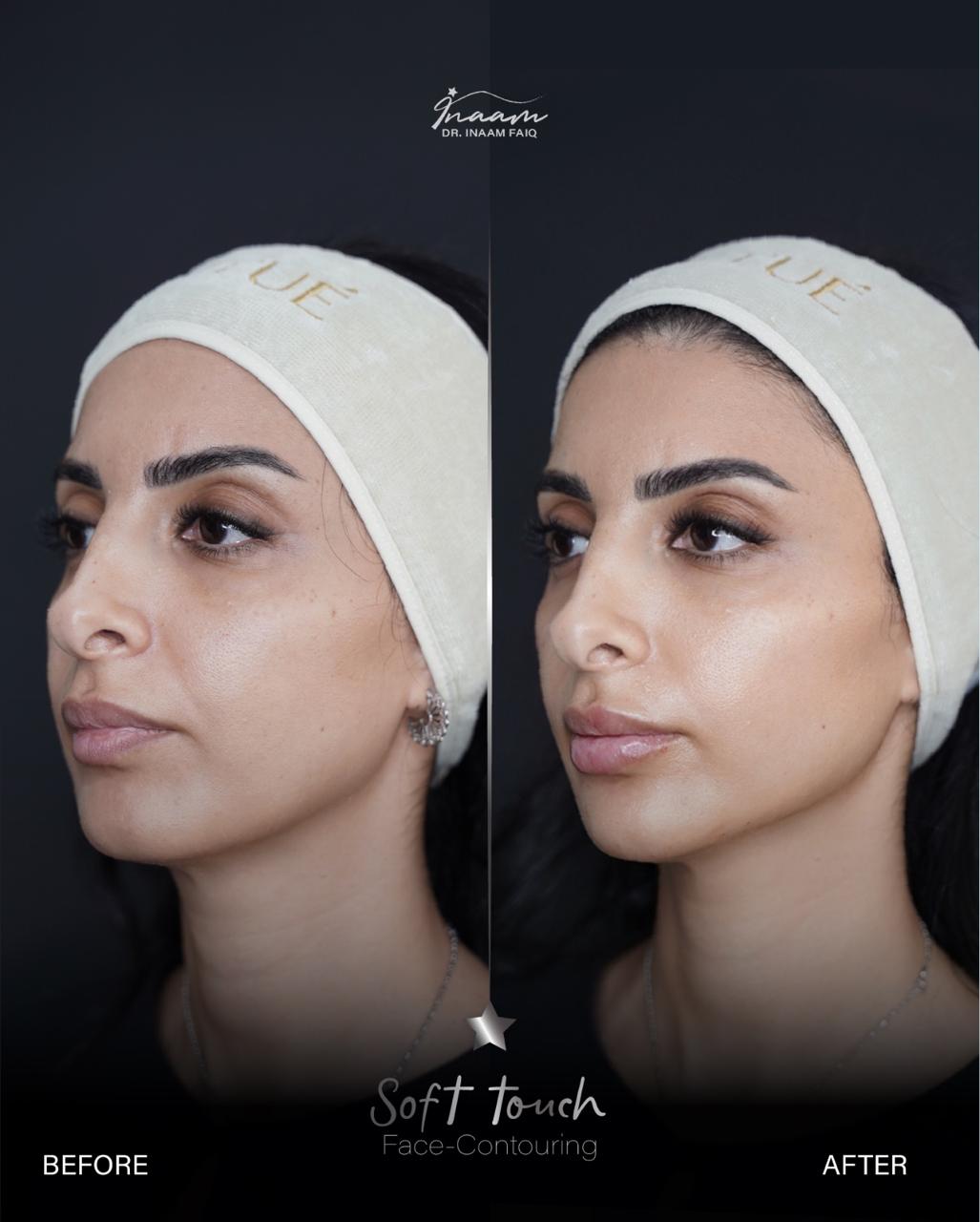
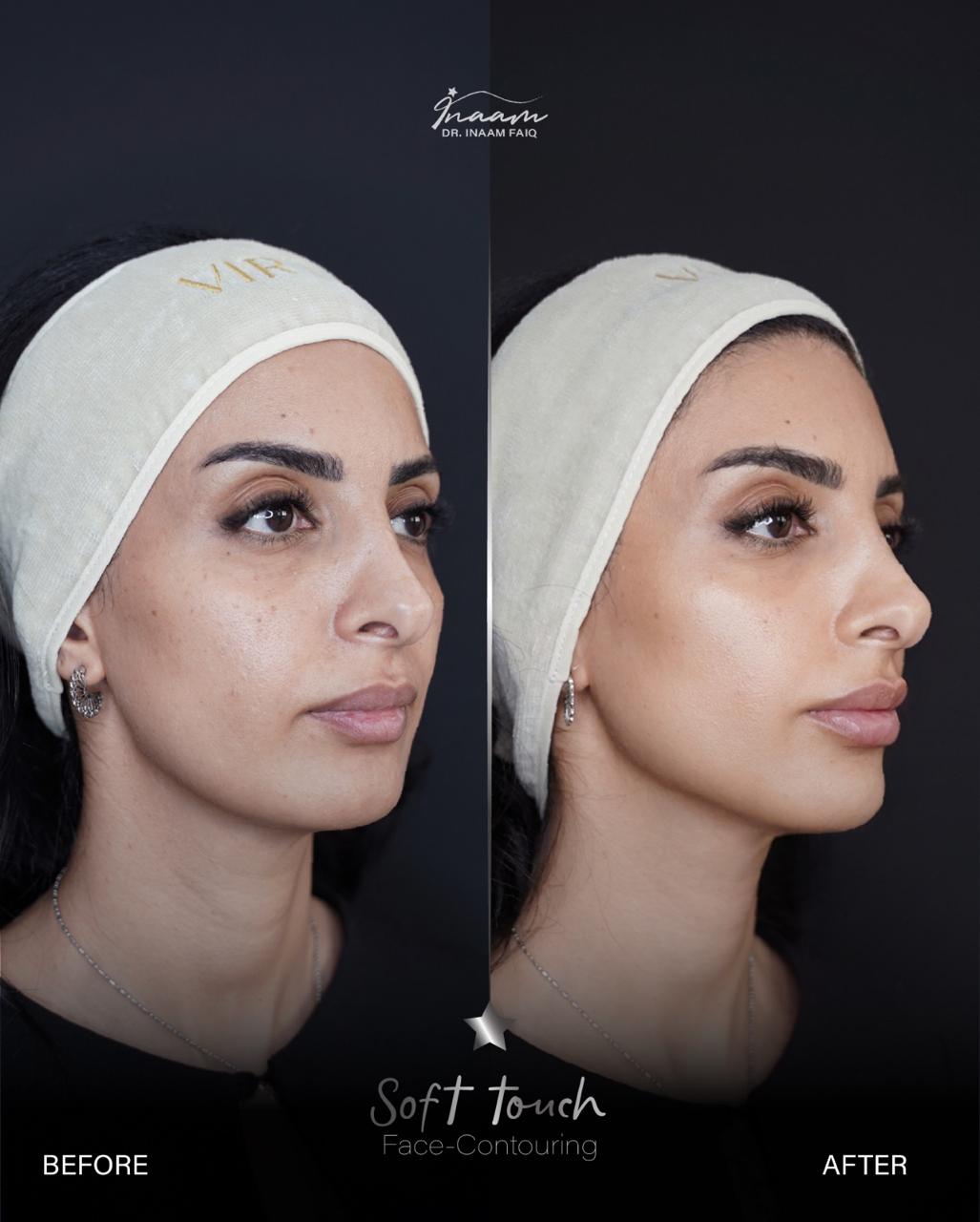
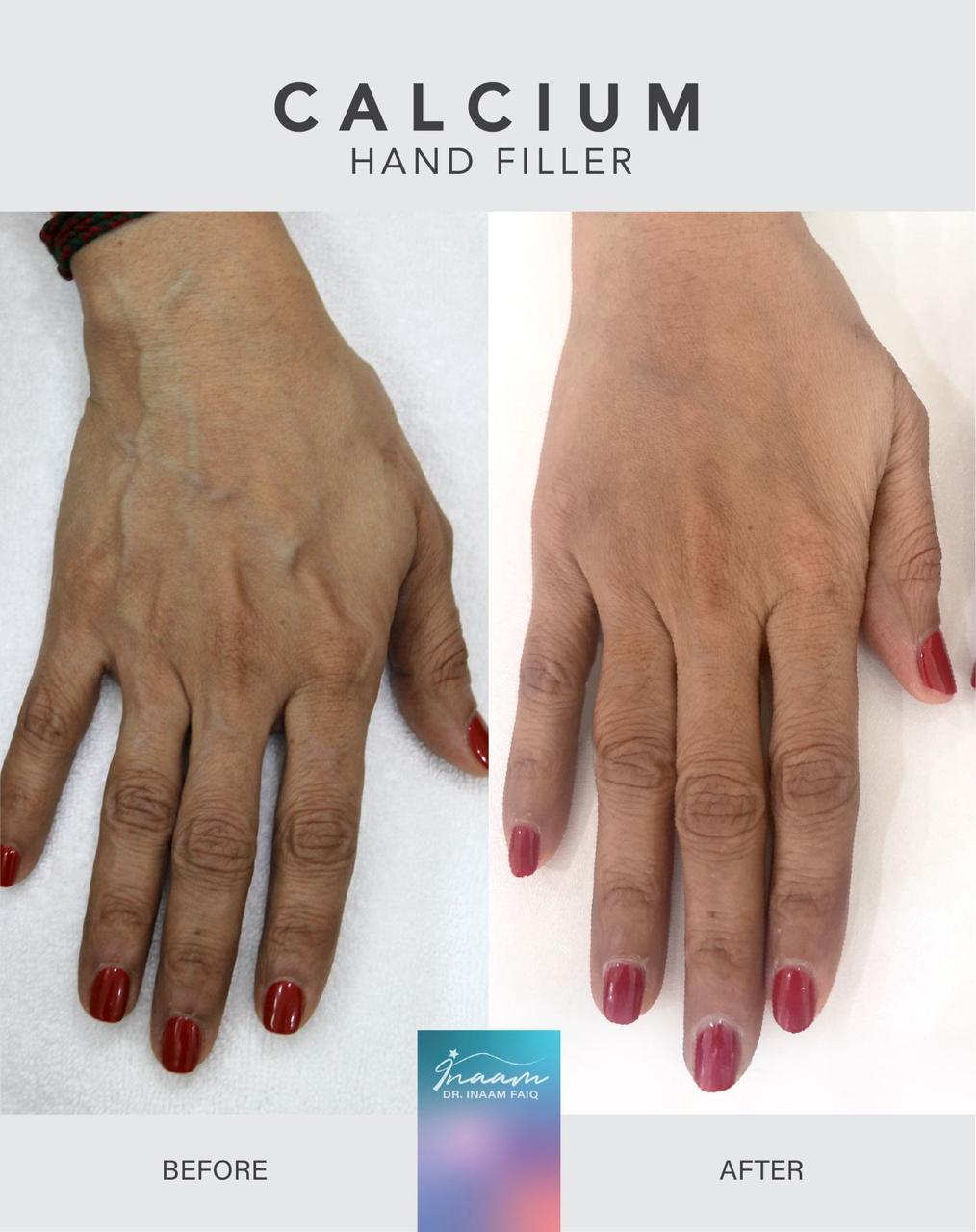
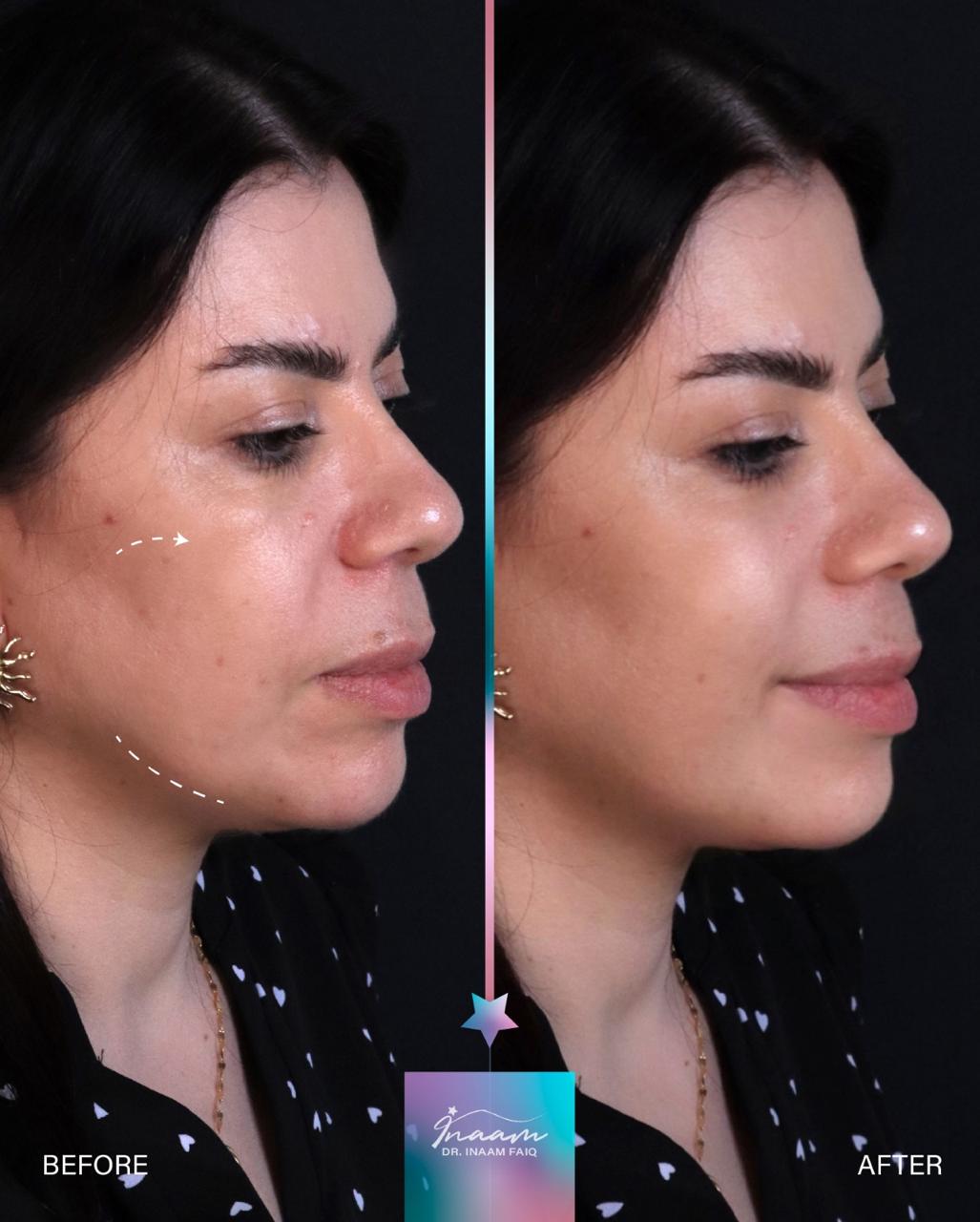
View the results gallery → Results from Dr. Inaam's happy patients.
Browse unretouched before & after results from Dr. Inaam's patients across all treatments.
Everything patients ask before booking.
Does Morpheus8 hurt?
With proper numbing, most patients feel warmth and pressure rather than pain. Sensitivity varies by area — the neck and jawline are typically the most comfortable.
How much downtime is there?
Expect redness and mild swelling for 1–3 days, like a sunburn. Most patients treat on a Thursday and are camera-ready by Sunday. Tiny grid marks fade within a week.
How many sessions will I need?
Mild laxity or texture: often one. Acne scarring or significant laxity: usually 2–3 sessions, 4–6 weeks apart. Dr. Inaam gives you an honest number at consultation.
When do results appear?
Early tightening at 2–3 weeks, with the real remodelling building for up to 3 months as new collagen forms.
Is it safe for darker skin tones?
Yes — the radiofrequency energy is delivered beneath the surface, making Morpheus8 one of the safest remodelling treatments across all skin tones.
How is it different from regular microneedling?
Regular microneedling works at the surface; Morpheus8 adds fractional radiofrequency heat at up to several millimetres deep — that heat is what contracts tissue and remodels collagen.