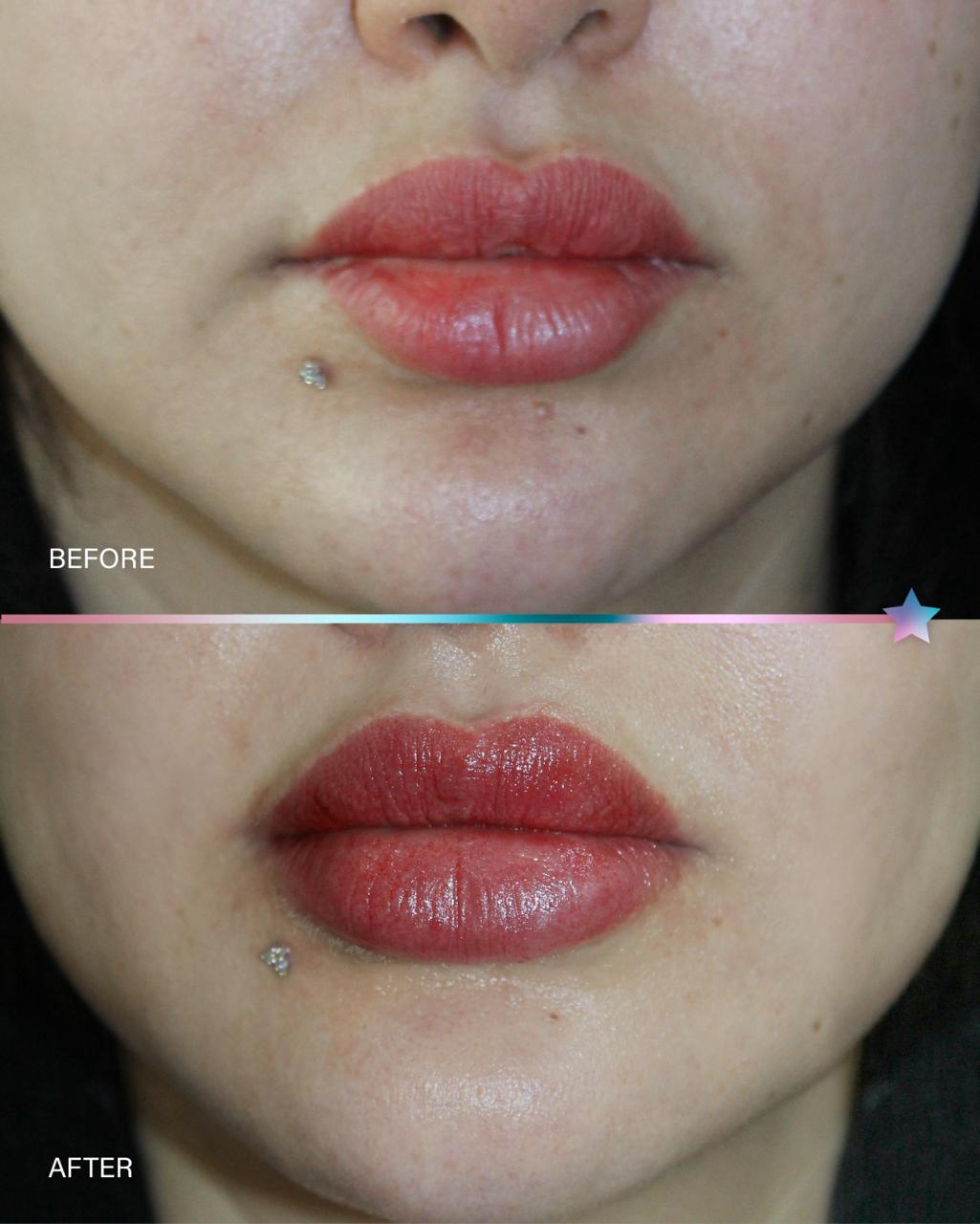
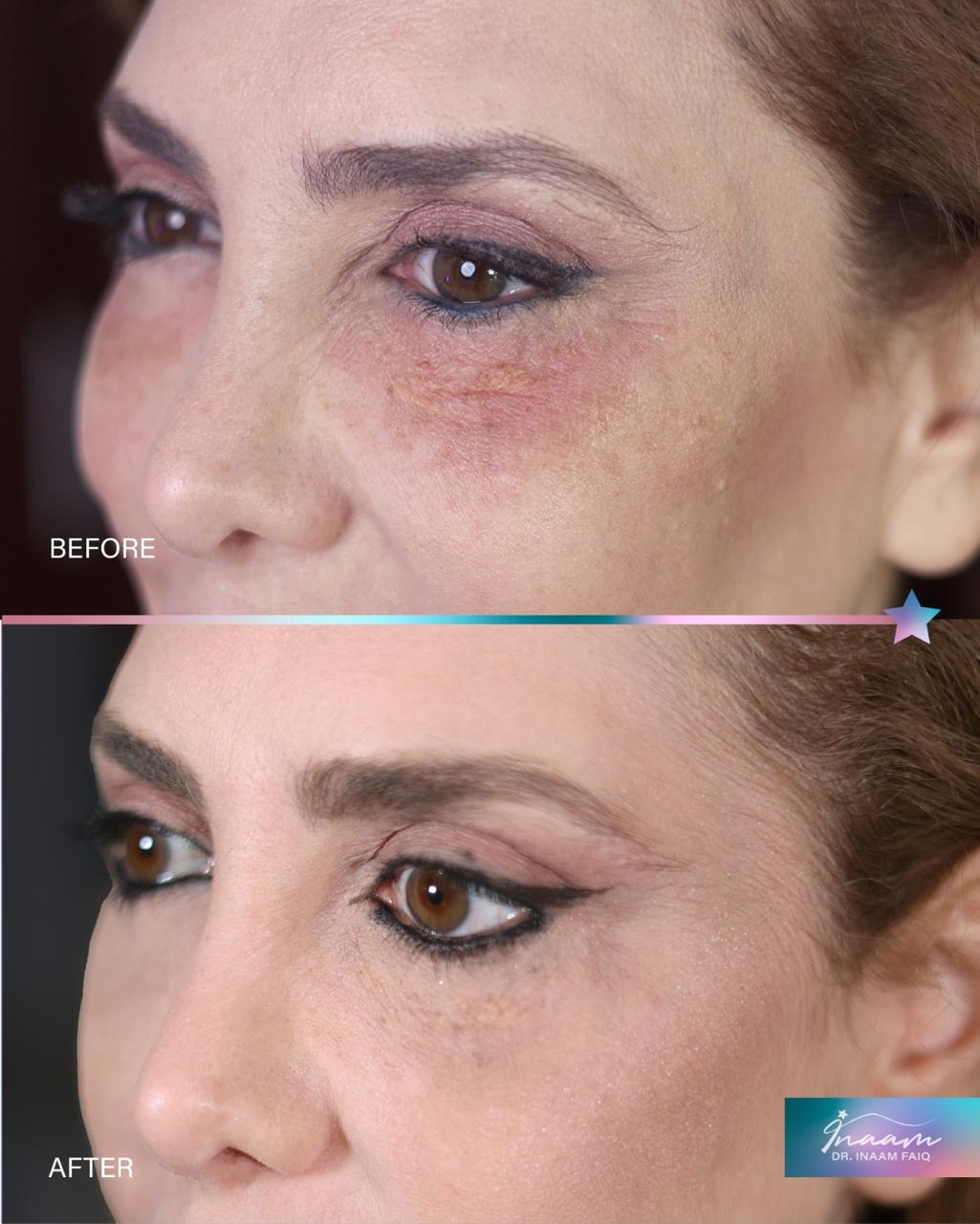
Understanding Dermal Fillers: Types and Materials
Not all dermal fillers are the same. The products I select for each patient differ in their composition, consistency, longevity and ideal placement depth. Understanding what goes into your skin — and why — is an important part of making an informed treatment decision. Here is a clear overview of the main filler categories I work with at my clinic in Dubai Healthcare City.
Hyaluronic Acid Fillers: Juvederm and Restylane
Hyaluronic acid (HA) is a naturally occurring substance found throughout your skin, joints and connective tissue. Its primary biological role is to attract and retain water — a single molecule of hyaluronic acid can hold up to one thousand times its weight in moisture. This is why HA-based fillers produce such natural-looking results: they integrate with your existing tissue and hydrate from within, creating fullness that looks and feels like your own skin.
The two HA filler families I use most frequently are Juvederm (manufactured by Allergan) and Restylane (manufactured by Galderma). Each brand offers a range of formulations designed for different purposes:
- Softer, thinner gels for delicate areas such as the lips and tear troughs, where a subtle, smooth result is essential
- Medium-density gels for nasolabial folds, marionette lines and general facial contouring
- Firmer, more cohesive gels for deep structural work — cheekbone projection, jawline definition, chin augmentation — where the filler needs to hold its shape under tissue pressure
Which product I choose depends entirely on the area being treated, the depth of placement and the result we are working towards. There is no single "best" filler — there is only the right filler for the right indication, placed in the right layer of tissue.
Calcium Hydroxylapatite: Radiesse
Radiesse is a filler composed of calcium hydroxylapatite (CaHA) microspheres suspended in a water-based gel carrier. Unlike HA fillers, which work primarily through volume replacement and hydration, Radiesse provides immediate structural support and stimulates your body's own collagen production over time. As the gel carrier is gradually absorbed, the CaHA microspheres act as a scaffold around which new collagen forms.
I find Radiesse particularly useful for areas that require strong structural support — the jawline, chin and cheeks in patients with significant volume loss. It tends to last longer than most HA fillers in these deep-placement areas, typically twelve to eighteen months. However, it is not reversible in the same way that HA fillers are, which is an important consideration I discuss with patients during consultation.
Poly-L-Lactic Acid: Sculptra
For patients whose primary concern is gradual, widespread volume loss rather than targeted correction in a specific area, I may recommend Sculptra. Sculptra works differently from traditional fillers — rather than adding volume directly, it stimulates your body to rebuild its own collagen over a series of sessions. The results develop gradually over several months and can last up to two years. I cover Sculptra in detail on its dedicated treatment page.
Why Hyaluronic Acid Remains My First Choice
While each filler type has its place, hyaluronic acid fillers remain my first-line recommendation for the majority of patients. The reason is straightforward: HA fillers are fully reversible. An enzyme called hyaluronidase can dissolve hyaluronic acid filler quickly and safely if needed — whether due to an aesthetic concern, an unexpected reaction or the rare but serious complication of vascular occlusion. This reversibility provides a critical safety net that other filler types do not offer. In my practice, patient safety always takes precedence over longevity.
The Art of Natural-Looking Results
The single most common concern patients raise during a dermal filler consultation is not about pain or recovery — it is about looking overdone. "I do not want to look like I have had something done" is something I hear almost daily. It is a completely valid concern, and one that shapes every treatment I perform.
Restore, Do Not Overfill
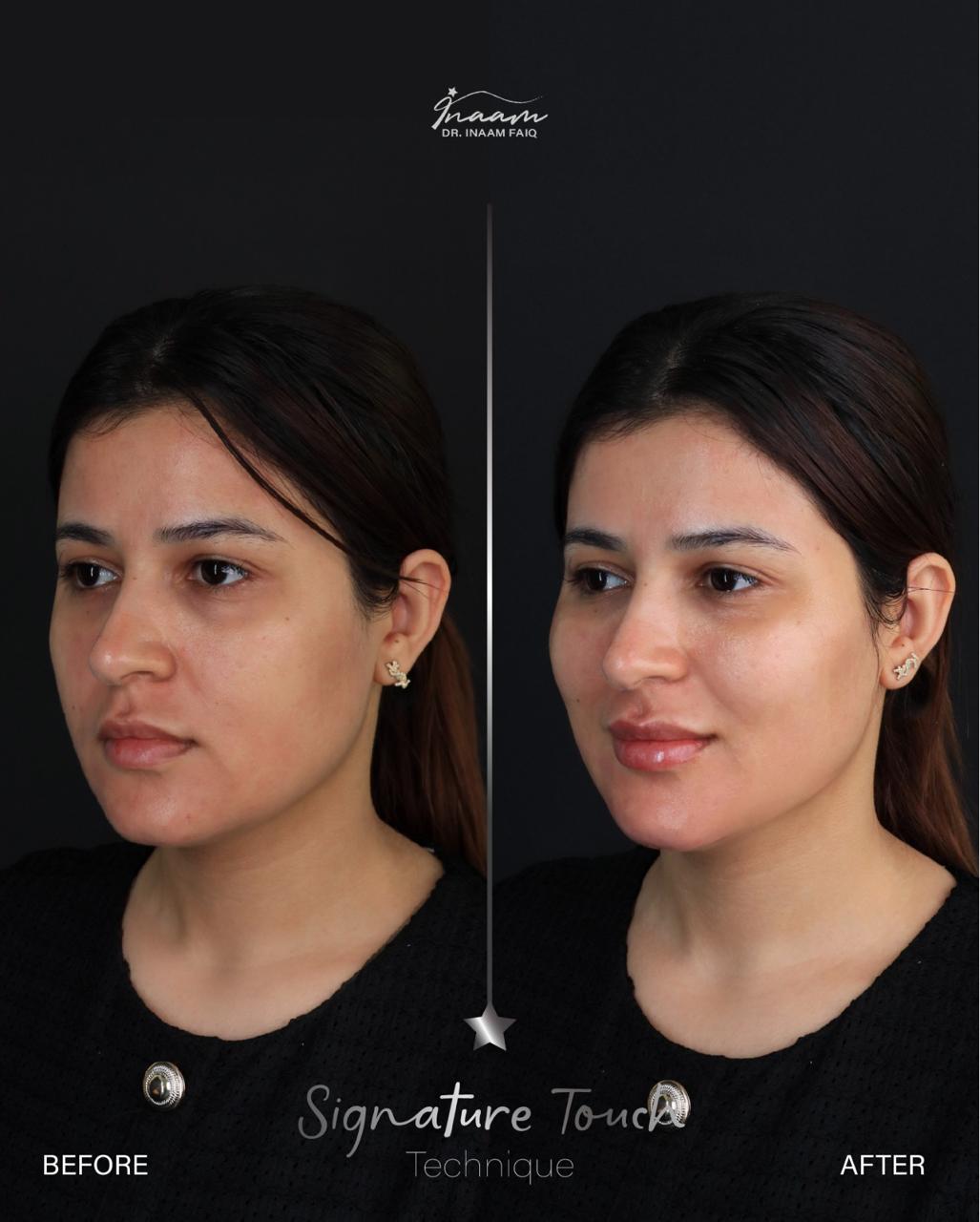
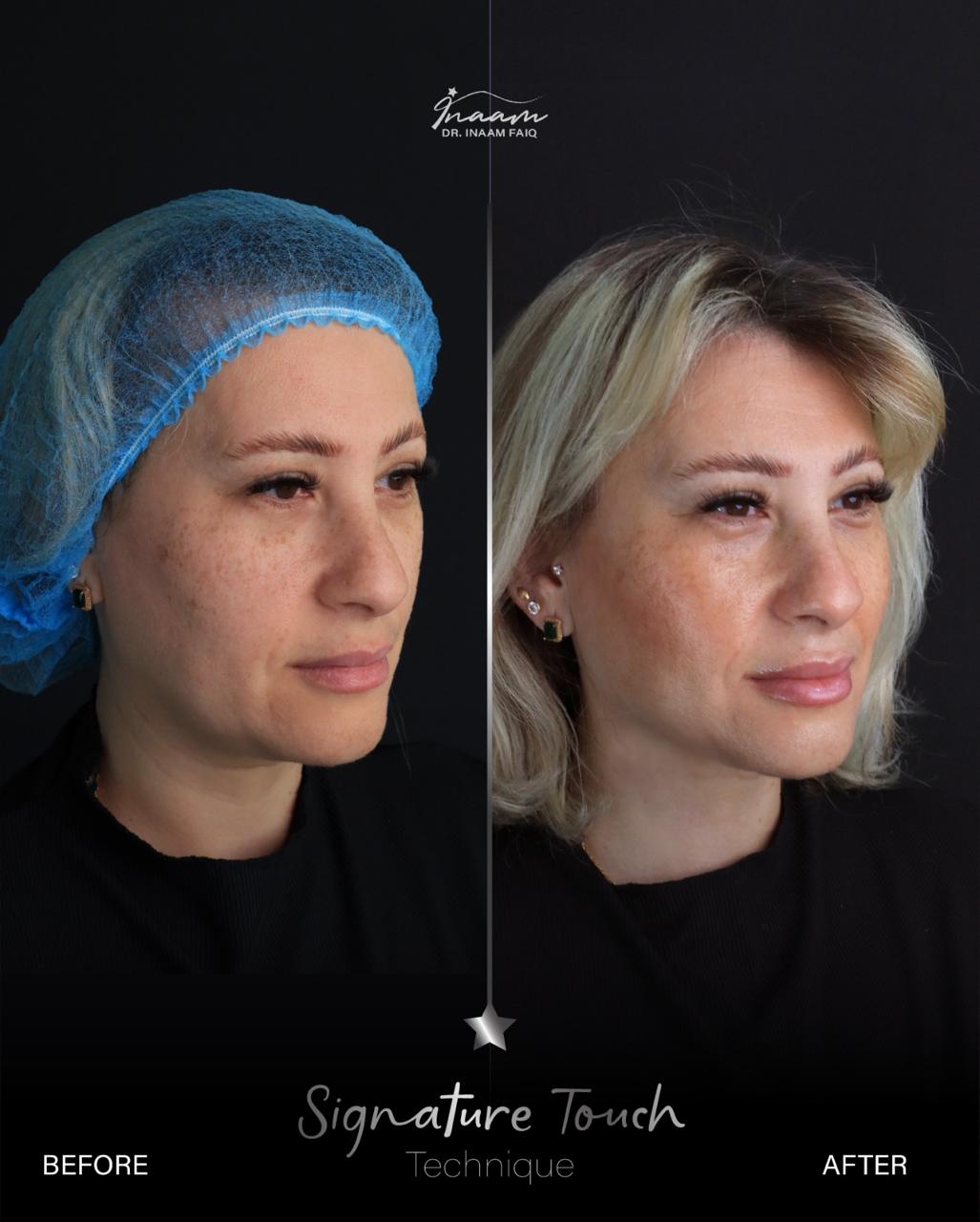
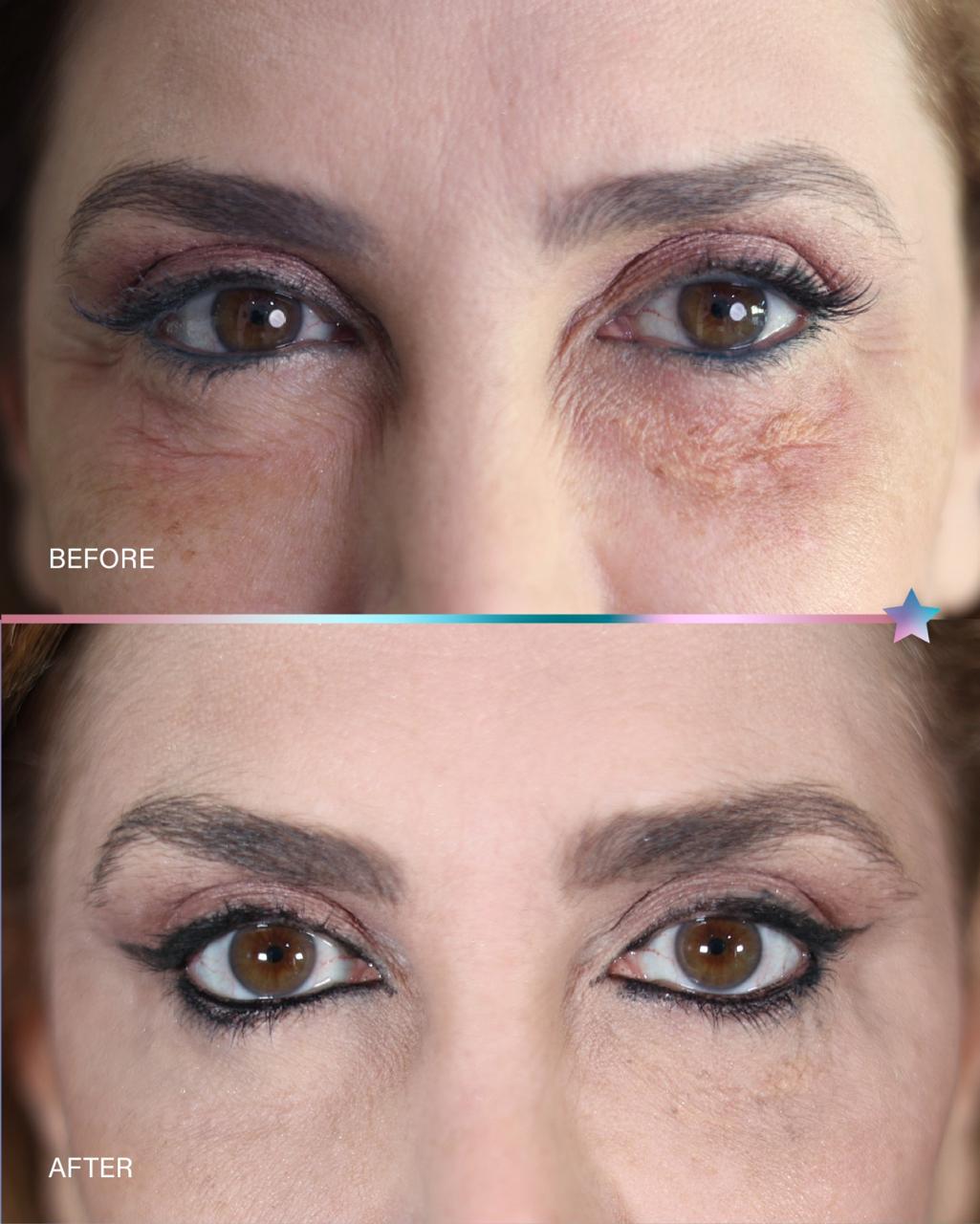
My philosophy with dermal fillers has always been to restore what time has taken, not to create something that was never there. The goal is to return your face to a version of itself that looks rested, balanced and naturally healthy — not to transform your features into something unrecognisable. When a patient leaves my clinic, I want people to tell them they look well, not ask them what they have had done.
This means I am conservative by design. I would rather use one syringe less than one syringe too many. It is always possible to add more filler at a follow-up appointment if needed; it is far more difficult to correct an overfilled result. This measured, step-by-step approach is how I have worked for over twenty years, and it is the foundation of every treatment plan I create.
Facial Anatomy Assessment: Reading Proportions
Before any filler is placed, I spend time assessing the face as a whole — not just the area the patient has come in to treat. Ageing does not happen in isolation. Volume loss in the temples affects the upper face. Cheek deflation deepens nasolabial folds. Bone resorption along the jaw changes chin projection. These changes are interconnected, and treating one area without understanding how it relates to the rest can produce a result that looks "off" even if the treated area itself looks fine.
I assess facial proportions, symmetry, bone structure, fat pad position and skin quality before deciding where filler should go, how much is needed and at what depth it should be placed. This anatomical assessment is the step that separates a considered treatment plan from a prescriptive one — and it is where decades of clinical experience make the most measurable difference.
The "Pillow Face" Problem
The overfilled look that patients fear — often described as "pillow face" — does not happen because of the filler itself. It happens because of how filler is used. Specifically, it results from placing too much product, placing it too superficially, or treating areas in isolation without considering the face as a connected structure.
Avoiding this requires discipline. It requires an injector who is willing to say "that is enough for today" even when a patient requests more. It requires understanding that facial beauty is about proportion and harmony, not maximum volume. And it requires the experience to know, before injecting, exactly how much product a given area can accept before it starts to look unnatural. This is not something that can be learned from a textbook — it comes from years of treating thousands of faces and studying the outcomes.
Why Experience Determines the Result
Two practitioners can use the identical product, in the same volume, on the same patient — and produce entirely different results. The difference lies in placement: the precise depth of injection, the angle of the needle or cannula, the plane of tissue the filler sits within, and the way product is distributed across the treatment area. These technical decisions are made in real time, guided by knowledge of anatomy and refined by years of clinical observation. It is the reason I believe patients should always seek a medically qualified injector with substantial experience, not simply the most convenient appointment.
Day-by-Day Recovery Timeline
One of the advantages of dermal filler treatment is the relatively short recovery period. Most of my patients return to their normal routine within a day or two. However, it is important to have realistic expectations about the timeline from treatment to final result. Here is what I tell patients to expect after a filler session at my clinic.
Immediately After Treatment
You will see a visible improvement straight away. The treated area will have noticeably more volume, definition or smoothness depending on what we have addressed. There will also be mild swelling and redness at the injection sites, which is entirely normal. Some patients experience a slight feeling of firmness or fullness in the treated area — this is the product settling into the tissue. I always review the result with patients before they leave to ensure we are both satisfied with the initial outcome.
Day 1 to 3: Peak Swelling
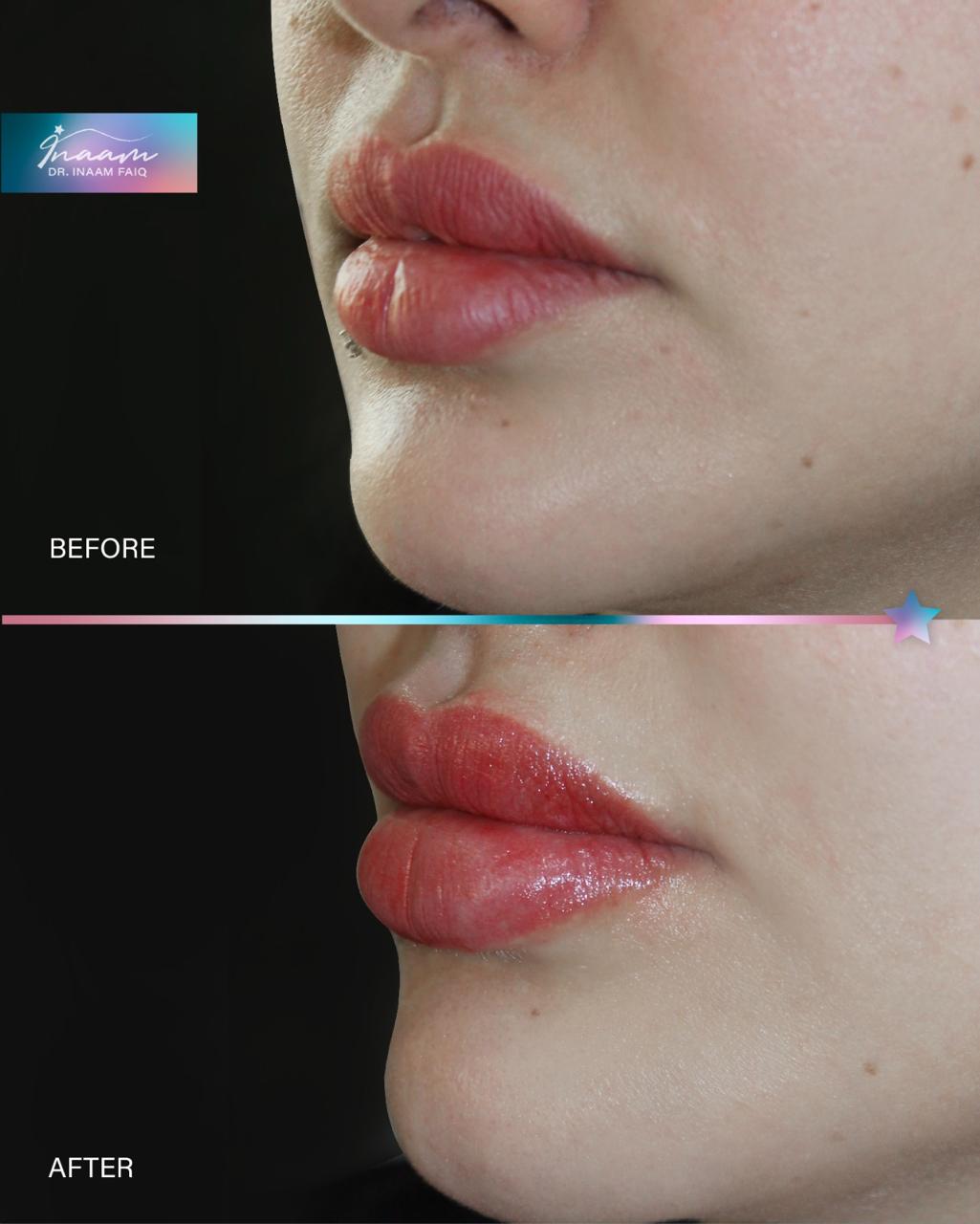
Swelling typically peaks on the first or second day after treatment. This can make the result look slightly more pronounced than the final outcome will be — particularly in areas like the lips, where the tissue is naturally more reactive. Minor bruising may appear at some injection sites, especially in patients who bruise easily or in vascular areas such as the under-eyes and lips. I recommend keeping the head elevated when sleeping, avoiding strenuous exercise for 24 to 48 hours and applying a cold compress gently if swelling feels uncomfortable.
Day 5 to 7: Swelling Subsides
By the end of the first week, the majority of swelling and any bruising will have resolved. The filler will have begun to integrate with your tissue, and you will start to see an early version of your final result. The treated area should feel softer and more natural to the touch than it did in the first few days. Most patients feel completely comfortable in social and professional settings by this point.
Day 14: True Result Visible
Two weeks is the point at which I consider the result to have settled fully. Any residual swelling has resolved, the filler has integrated completely with the surrounding tissue and what you see in the mirror is your true outcome. This is when I schedule a follow-up review — to assess the result together, make any minor refinements if needed and ensure you are happy with what we have achieved. If a small touch-up is required, this is the ideal time to do it.
Month 3 and Beyond: Maintenance Considerations
At the three-month mark, your filler will be fully settled and performing at its best. This is a good time to start thinking about your maintenance plan. Rather than waiting until filler has completely dissolved before retreating, I generally recommend topping up while some product remains. This approach maintains a consistent, natural appearance and often means less filler is needed at each subsequent session. The exact maintenance schedule depends on the product used, the area treated and your individual metabolism — all of which I discuss during your follow-up appointments.
Safety Profile and What to Watch For
Patient safety is the non-negotiable foundation of every treatment I perform. The dermal fillers I use in my practice are established, well-researched products with strong safety records and regulatory approval. However, no medical procedure is without risk, and I believe patients deserve a clear, honest understanding of what those risks are.
Established Products with Proven Safety Records
The filler brands I work with — including Juvederm and Restylane — have been approved by the United States Food and Drug Administration (FDA) and are widely used in clinical practice worldwide. They have undergone extensive clinical trials and have accumulated decades of real-world safety data. I source all products through verified, authorised channels and never use unbranded, grey-market or counterfeit fillers. This is a standard that should be non-negotiable at any clinic, and it is something patients should always ask about.
Common Effects: What Is Normal
The most frequently experienced effects after dermal filler treatment are temporary and expected. These include:
- Swelling at and around the injection sites, typically resolving within three to seven days
- Bruising, which may appear at injection points and usually fades within five to ten days
- Tenderness when touching the treated area, lasting 24 to 72 hours in most cases
- Redness at injection sites, which generally resolves within hours
- Mild asymmetry in the first few days due to uneven swelling — this typically evens out as swelling settles
These effects are a normal part of the body's response to injection and do not indicate a problem. I provide detailed aftercare instructions following every treatment to help manage these symptoms comfortably.
Rare but Serious: Vascular Occlusion
The most serious risk associated with dermal fillers is vascular occlusion — a situation in which filler is inadvertently injected into or compresses a blood vessel, restricting blood flow to the surrounding tissue. This is rare, but it is a risk that every patient should be aware of and every injector should be prepared to manage.
The signs of vascular compromise include unusual blanching (whitening) of the skin, severe pain disproportionate to what is expected, and a dusky or mottled discolouration of the treated area. If recognised and treated promptly — with hyaluronidase to dissolve the filler and restore blood flow — vascular occlusion can be resolved without lasting consequence. This is one of the key reasons I favour hyaluronic acid fillers: the ability to dissolve them in an emergency is a critical safety advantage.
Why Your Injector's Qualifications Matter
The safety of dermal filler treatment depends far more on the person performing it than on the product itself. A thorough understanding of facial vascular anatomy, correct injection depth, appropriate technique and the ability to recognise and respond to complications immediately — these are skills rooted in medical training and clinical experience. They cannot be acquired through a weekend certification course.
In my practice at Dubai Healthcare City, I maintain emergency protocols and keep hyaluronidase immediately available at all times. I have the medical training to manage complications should they arise — from minor bruising through to the rare vascular event. This level of preparedness is what distinguishes a medical aesthetic clinic from a purely cosmetic setting, and it is something I encourage every patient to consider when choosing where to have their treatment.
Medical References
- U.S. Food and Drug Administration. FDA-Approved Dermal Fillers. Regulatory approval data for hyaluronic acid fillers including Juvederm and Restylane product families. fda.gov
- Funt D, Pavicic T. Dermal fillers in aesthetics: an overview of adverse events and treatment approaches. Clinical, Cosmetic and Investigational Dermatology. 2013;6:295-316.
- Beleznay K, Carruthers JDA, Humphrey S, Jones D. Avoiding and treating blindness from fillers: a review of the world literature. Dermatologic Surgery. 2015;41(10):1097-1117.
- Rohrich RJ, Ghavami A, Crosby MA. The role of hyaluronic acid fillers (Restylane) in facial cosmetic surgery: review and technical considerations. Plastic and Reconstructive Surgery. 2007;120(6 Suppl):41S-54S.